


















-
Related Topics
-
Date added:August 10 2026
-
Read time:6 min
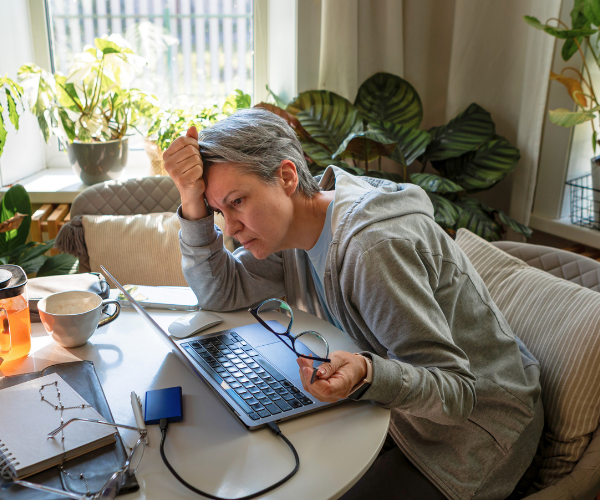
Ever find yourself wide awake in the early hours, unable to re-enter the land of nod? Many women struggle with 3 am wake-ups. Here’s what might be causing them and how to take action.
For Lucy, it’s thoughts of work that often keep her from slumber.
“I may mull over things I’m stressed about and on some occasions I won’t go back to sleep at all,” says the 33-year-old publicist, who has “struggled” with sleep on and off since her early 20s.
“[I] will go through stints of the classic 3 or 4 am wake up,” she says.
Sound familiar?
The state of women’s shut-eye isn’t great. Compared to men, women in Australia are more likely to report short or poor-quality sleep and they are also more likely to experience insomnia.
Health psychologist and Chief Health Officer of the Sleep Health Foundation Moira Junge says that waking in the very early morning hours is not only common, “it can be considered normal”.
“Sleep studies show us that people can wake during the night often [and for healthy sleepers, it’s a non-event].” These people, she explains, generally go back to sleep effortlessly with no memory of the wakening. They don’t check the time or consider themselves a poor sleeper.
According to Dr Junge, the problem occurs when there is a difficulty returning to sleep, in other words, insomnia.
Why can’t I get back to sleep?
There are plenty of reasons for early morning insomnia, such as chronic pain and other underlying health concerns. However, in Dr Junge’s experience, “anxiety is the most common [reason]”.
Too stressed to sleep?
When we are overly stressed, we are too “wired” and “alert” for sleep, says Dr Junge. If the heightened stress and disrupted sleep persist, she says “what generally happens is the primary problem becomes the worry of not sleeping”.
As difficult as it may be, “it’s important not to stress about not sleeping or associate sleeping with stress”, she adds.
The alcohol effect
With its power to send us to sleep quickly, alcohol appears the perfect sleep aid. But according to Steve Allsop, Emeritus Professor at Curtin University’s National Drug Research Institute, “we do not get quality sleep under alcohol’s influence”.
Alcohol can “increase the speed of falling asleep, [but] it suppresses or reduces rapid eye movement (REM) sleep, which is essential to sleep health and waking refreshed”, he says. The drink also increases urine production, meaning night-time trips to the loo. Plus, large amounts of alcohol can affect the respiratory system, promoting snoring and poor sleep, adds Professor Allsop.
As for how many drinks it takes to disrupt sleep, Professor Allsop says “even modest amounts of alcohol can have an impact”. Ultimately, he recommends factoring your alcohol consumption into your sleep plan, having a few alcohol-free days each week and observing the drinking guidelines.
Forever tried
Dagmara talks about how menopause and cancer treatment affected her sleep.
Dagmara’s story
Why does menopause cause sleep problems?
About 1 in 2 women have sleep problems around menopause. This makes sense. Many women experience hot flushes, night sweats, mood changes and other symptoms that can affect their daily lives.
Cases of obstructive sleep apnoea also increase around this time, with weight gain and hormonal changes at menopause a possible reason. Obstructive sleep apnoea occurs when the muscles in the throat relax during sleep, stopping the person from breathing. Snoring is one of the signs of the condition.
In addition, Dr Junge says this stage of life can be demanding, with many women juggling ageing parents, dependent children and work. She recommends keeping active and being mindful that once menopause symptoms settle, sleep problems and any sleep-related anxiety can linger if we’re not careful.
Watch The sleep-menopause connection webinar from Jean Hailes for Women’s Health and the Sleep Health Foundation.
Body clock chaos
In some cases, early morning sleep troubles are driven by a bedtime schedule that is out of sync with the body’s circadian rhythm, or internal ‘clock’. Dr Junge points to shift workers who may experience this problem.
To promote a healthy circadian rhythm, she says we should ideally expose ourselves to light during the waking period and darkness as the sun sets. To do the latter, she recommends using dim lighting before bed. Also be aware of how screen time affects your sleep.
Sleep tips for shift workers
Dr Moira Junge shares her top sleep tips for those who work shift hours.
Get tips
The toll
Unsurprisingly, poor sleep can affect almost every aspect of our lives. “When sleep-deprived, the part of the brain that ties emotions to memories, the amygdala, doesn’t function properly, which means reactions will be more intense in some situations,” says Alisha Guyett, a sleep researcher at Aarhus University in Denmark.
She says that insufficient shut-eye affects memory, mood regulation and judgment. “From a physical perspective, sleep allows the body to restore its immune system. If we reduce the amount of sleep, our bodies can be more susceptible to illness.”
So how do you address those 3 am wake-ups?
What should I do if I wake up at 3am?
It’s important to identify the cause of the insomnia, of which there are many. If your sleep issues are persistent or concerning, seek medical advice.
If medication or a medical condition isn’t driving the problem, these tips from Dr Junge might help:
- Don’t panic – Avoid checking your clock and try not to worry about being awake.
- Enjoy the moment – Give yourself 20 to 30 minutes of lying peacefully in bed.
- Try to reset – If you’re frustrated, get up and do a non-stimulating activity in dim lighting, such as reading. Then return to bed.
- Know when to call it quits – If it’s nearing your scheduled wake-up time, cut your losses and consider having an early start.
- Consider your circadian rhythm – Can you adjust aspects of your schedule to suit your natural sleep tendencies?
- Try to reduce stress – If stress is keeping you awake, find healthy ways to relax, such as mindfulness meditation.
Related Articles


Women’s Health Week in the outback – taking to the skies with the Royal Flying Doctor Service
Menopause • Breast health • Periods • 4 min

New Endometriosis Management Plan puts women at the centre
Endometriosis • Persistent pelvic pain • 3 min
Are you eating enough? The everyday signs you’re running on empty
Nutrition and healthy eating as you age • 5 min

The exercise gap – Why women are moving less
Staying active as you age • 4 min