














-
Related Topics
-
Date added:September 1 2026
-
Read time:4 min
Exercising regularly is one of the best things you can do for your health, but everyday challenges make it harder for many women to stay active.
From caregiving and paid work to menopause and safety concerns, the barriers are real. We unpack the exercise gap and speak to women who have found practical ways to make movement work for them.
There are significant benefits of regular exercise for physical and mental health. Staying active is one of the best things you can do to help lower blood pressure, improve bone density, reduce your risk of dementia and more.
According to the latest Australian National Health Survey, 41% of women aged 18 to 64 are insufficiently physically active, compared with 34% of men.
And it could be because we lack time. Carrying ‘the mental load’ can make it harder for women to prioritise physical movement throughout the day.
In the latest How Australians Use Their Time, 36% of women reported always or often feeling rushed or pressed for time. Balancing work and family was the most common reason, cited by 42% of people who experienced time pressure.
So how can you keep finding ways to move your body, despite the obstacles?
Be aware of what’s holding you back
While time is a big factor, there can be a number of things that keep women from getting to the gym or onto the running track. It might be an injury or a condition, or it could be something less visible. Like many women, journalist Amanda Hooten knows how it feels to be self-conscious about exercise.
She says that gyms and group classes can be intimidating, especially if you don’t know the equipment or have the most expensive gear, or you are surrounded by people fitter than you.
“Even just putting on your exercise gear and thinking that there’s nowhere to hide now – that’s not a great feeling,” she says. “In a class you might not know how to do the yoga moves. Psychological hurdles can be a massive factor for women.”
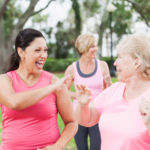
Amanda says that overcoming her fears meant starting small and building exercise into her routine over time. She committed to running 3 times a week with friends who, like her, have kids. That means hitting the pavement at 7.30 am on school days. Sitting down for a coffee afterwards on weekend runs has brought a sense of camaraderie and stronger friendships, too.
She says it was important to put aside the sole goal of losing weight and thinking about all the other health benefits of physical activity.
“A lot of women worry about the way they look when they are exercising. On one level you think, none of that matters, but on the other hand it can feel like it does. You have to get on with it somehow. You have to feel the fear and do it anyway.
“If you do it anyway, the benefits are just enormous. There’s certainly the mental health benefits, feeling fitter and stronger. There is heaps of research showing exercise is as good as medication for many people suffering from depression. Not in every case, but there are some clear psychological benefits.”
Get moving with friends
Lindy Cook encountered big barriers to exercise when living in Melbourne during the COVID-19 lockdowns. Before the lockdowns, she swam occasionally in the pool, but hadn’t ventured into the world of ocean swimming.
When COVID hit, pools closed so Lindy started going for long walks to St Kilda beach with a friend. “I remember mid-winter, we both decided it was time to start doing very short [ocean] swims to feel alive again,” says Lindy.
While solo swimming brought a sense of calm and clarity, Lindy found herself drawn to a group who were going out regularly. “There was something about the shared group chat, joy and connection in the water that was instantly addictive. The more I swam with everyone, the more drawn in I became,” she says.
A year after she started ocean swimming, Lindy did her first 5 km event and also swam the notorious crossing between Sorrento and Point Lonsdale.
“Swimming hasn’t just made me fitter and stronger, it’s made me happier and more resilient. Without a doubt, it’s the best thing I have done to improve the quality of my life.”
Lindy now sees ocean swimming as a big part of how she will age well. “All ages and body types can swim. The age range for our group is around 21 to 67! I have plans to still be swimming well into my 80s – [there’s] no better way to live.”
Make movement work for you
Exercise doesn’t have to mean training for a marathon or spending hours at the gym. The best form of movement is the one you enjoy and can keep coming back to.
Whether it’s walking with a friend, dancing in the living room, swimming, gardening or strength training at home, every bit of movement counts.
Starting small, finding support and choosing activities that fit your life can make it easier to build a lasting habit.
“Every bit of progress will count. Forget what everybody else is doing and just do something nice for yourself,” says Amanda. “Don’t let perfect be the enemy of good. Feel good about doing anything.”
Related Articles
Women’s Health Week in the outback – taking to the skies with the Royal Flying Doctor Service
Menopause • Breast health • Periods • 4 min
New Endometriosis Management Plan puts women at the centre
Endometriosis • Persistent pelvic pain • 3 min
Are you eating enough? The everyday signs you’re running on empty
Nutrition and healthy eating as you age • 5 min

Nutrients for women – let’s go back to basics
Nutrition and healthy eating as you age • Heavy periods (menorrhagia) • Bone health • 4 min