Search Jean Hailes
-

How loneliness is impacting young women

  • Author:
  • Date added:
    September 3 2026
  • Read time:
    5 min

Clinical psychologist and Beyond Blue spokesperson Dr Luke Martin says young people are 2 times more likely to experience loneliness than older generations – and young women often experience it in unique and overlooked ways. Here, he unpacks the difference between fitting in and belonging, and what it takes to build connections that stick.

Loneliness always comes up in the top concerns of young people that we talk to. It’s usually financial pressure, housing affordability, relationship conflict and loneliness.

In our support services, so many young people say that they are surrounded by friends, constantly in contact, in lots of different groups and socially connected. But they still feel lonely.

Young people also tell us that social media amplifies this idea that everyone else ‘has it all together’. All of this pressure can create an idea of needing to fit in versus a feeling of belonging.

Fitting in is asking, ‘How do I change myself to be accepted by others?’. Whereas belonging is being accepted for who you already are.

A lot of young women we speak to talk about this pressure to fit in but not necessarily feeling known by the people in their life.

“Fitting in is asking, ‘How do I change myself to be accepted by others?’. Whereas belonging is being accepted for who you already are.”
Dr Luke Martin

In Australia, 2 in 5 young people say they feel lonely. It’s absolutely an issue.

Loneliness can be a signal

Often when people feel lonely, they can think something is wrong with them.

Occasional loneliness is a normal human emotion that we need to listen to – it can guide us to reconnect. The problem comes when loneliness persists.

Being in an ongoing state of loneliness can increase the risk of poor mental health and chronic health conditions.

For young women in particular, the issue is often in the quality of their relationships, rather than having no people in their networks. Young men are more likely to say they have no one to confide in. Young women often say they have people around them, but they don’t feel those relationships are ones in which they feel accepted or valued.

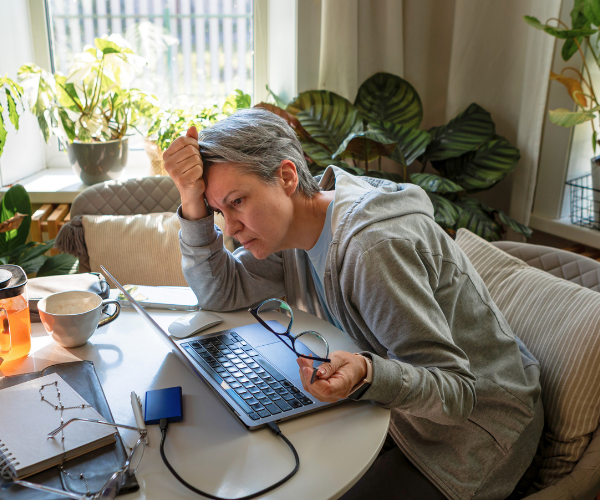
If you’re worried about chronic loneliness for a young person in your life, the biggest flag is that they start withdrawing from their world. They’re less likely to accept invitations, less likely to be chatty in the group. They can become withdrawn and shut down.

When someone is persistently lonely, their stress levels increase. Our nervous systems don’t like to be isolated from the group. Loneliness can really affect your self-worth. It’s important to pay attention to it.

Find more health information for girls and teens and young women.

Not just part of growing up

Forming your own identity outside of your family is a normal part of growing up. This is an important developmental task and it’s why young people prioritise friendships and their social network. When this isn’t going well, it can be distressing for them.

The current generation of young people are also growing up in multiple crises. There is a lot of uncertainty and change happening all at once. It’s created a world that can feel quite unstable.

The way we’ve designed our communities has also changed. We’re less likely to gather in public spaces. We change jobs and move houses more often too.

I’m the father of 3 girls. I try to give my kids opportunities to be out in the community, but their social time is more formal and organised, and less spontaneous than mine was. It’s been said that we are under-protective online and over-protective in the offline world.

How to help

Loneliness is a whole community issue. It can be a lot for an individual who is feeling lonely to take that step forward to participate.

We need to focus on everyone around the person who is feeling lonely. Whether it’s in your local community, school, your street or your workplace, think about how you can create opportunities to invite people in and make it easier for them to take that step.

For someone who is feeling lonely, it might be thinking about one small change you can make to break the cycle of loneliness. It might be sharing a bit more of yourself in a conversation, being a little more vulnerable. Our relationships develop when we go deeper and get to know each other better.

Society might make us think we need huge groups of people to be satisfied. You actually don’t need a lot of people. You only need one or 2 relationships in which you feel known. Quality matters more than quantity.

Think about close relationships as like investing in a bank account. Little investments help keep the relationship alive, so you’ve got an account there that you can draw from when you need support.

“For someone who is feeling lonely, it might be thinking about one small change you can make to break the cycle of loneliness. It might be sharing a bit more of yourself in a conversation, being a little more vulnerable.”
Dr Luke Martin

It can be hard to make a new friend. It can often be easier to build on what you’ve already got – turn an acquaintance into a friend, or a friend into a better friend by scheduling things in advance and building social contact into your existing routines and activities. Who can you call for a chat when driving to an appointment? Who might like to join you on a regular walk? We are hard-wired for connection. We are not an island. We need each other.

And remember, if you’re struggling, chatting to a counsellor can also be a helpful way to short-circuit those spiralling thoughts. You don’t have to be in crisis to reach out for help.

For support over the phone or online, call Beyond Blue on 1300 22 4636 or head to beyondblue.org.au/getsupport. Call 000 in an emergency or Lifeline on 13 11 14. To speak with an Aboriginal and Torres Strait Islander crisis supporter, call 13YARN (13 92 76).

Dr Luke Martin

About Luke

Clinical psychologist and Beyond Blue spokesperson

Related Articles