












-
Related Topics
-
Date added:August 6 2026
-
Read time:4 min
Your 60s can be a time to travel or explore new interests – and you want to be well enough for whatever life brings your way. Our specialist women’s health GP Dr Melanie Hemsley explains the health checks and habits that can help women thrive in this decade and beyond.
The 60s are often a time of transition. Many women are approaching retirement and their children have grown up, so they finally have more time for themselves. Others are dealing with loss or chronic health issues.
No matter what’s happening in their lives, I encourage women to think about what they want the next few decades to look like. Whether it’s travelling, spending time with grandchildren or simply staying independent, the healthy choices you make now can help make those things possible.
Keep up with your health checks
One of the most important things I recommend is having a regular GP and seeing them every 3 to 6 months for health checks.
That includes monitoring your blood pressure, cholesterol, diabetes risk and kidney health, as well as keeping up to date with breast, bowel and cervical cancer screening.
Regular eye and skin checks are worthwhile, and don’t forget your hearing. Hearing loss can affect your social connections and is a risk factor for dementia. Early assessment and treatment can make a real difference.
It’s also worth keeping up to date with vaccinations. An annual influenza shot is recommended. Consider pneumonia and shingles vaccinations if you’re over 65, and whooping cough if you haven’t had that vaccine in the last 10 years.
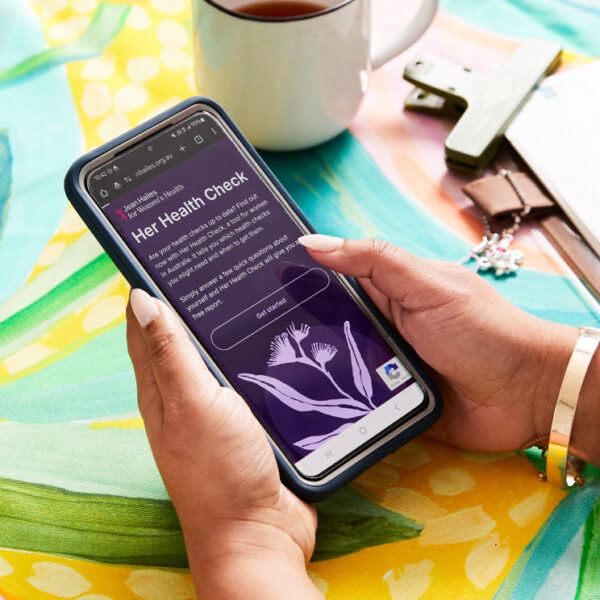
Are your checks up to date?
Find out now with Her Health Check.
Let’s check
Keep your bones and muscles strong
Our bones get weaker after menopause, and fractures are more common as we get older. The good news is you can do plenty of things to protect your bone health.
Exercise plays a vital role. Weight-bearing activities like walking, dancing or tennis, along with exercises that strengthen your muscles, can help maintain your bone density and mobility. Balance exercises are important too, as they help you stay steady on your feet.
If you haven’t had one already, ask your doctor about a bone density scan – especially if you have risk factors for osteoporosis.
What you eat matters, too. To maintain your muscle strength, it’s important to get enough protein. Calcium and vitamin D help keep your bones healthy, but it can be difficult to get enough of them through your diet or sunshine exposure. Talk to your doctor about whether supplements might be helpful.
Don’t put up with bladder or vaginal symptoms
Wee symptoms like urgency, leakage and recurrent urinary tract infections or vaginal dryness and prolapse are common after menopause, but that doesn’t mean you have to live with them.
Continence and genital issues can have a significant impact on quality of life. Women have told me they won’t dance at family celebrations or only visit places where they know toilets are nearby.
Yet many effective treatments are available, so if these symptoms are bothering you, talk to your doctor.
Keep your brain and body active
Regular physical activity, healthy eating, limiting alcohol, and not smoking all help protect your heart and brain.
It’s also important to be socially connected. Spending time with friends, joining community groups or taking part in activities you enjoy all support healthy brain ageing.
Challenging your brain does too, and I encourage women to keep learning. You might like to take up a new language, hobby or skill.
The 60s often bring many changes, like kids leaving home, retirement and loss of loved ones, so remember to look after your mental health – and check in if you have any concerns.
Learn more about how to protect your brain health and bone health.
Take small steps for lasting benefits
Healthy ageing is about being well enough to enjoy your life – and it’s never too late to start. Small, sustainable habits and regular health checks can help you stay healthy, independent and engaged in things you love for years to come.
Your future-proofing checklist
- Have a regular GP and keep up with routine health checks.
- Stay up to date with breast, bowel and cervical cancer screening.
- Ask your doctor about a bone density scan and supplements.
- Have regular skin, eye and hearing checks.
- Talk to your GP about any bladder or vaginal symptoms.
- Eat a healthy diet with enough protein and calcium.
- Stay physically active with weight-bearing, strength and balance exercises.
- Keep socially connected and continue learning new skills.
- Keep vaccinations up to date as recommended.
- See your doctor about any changes in your physical or mental health.
Related Articles
Women’s Health Week in the outback – taking to the skies with the Royal Flying Doctor Service
Menopause • Breast health • Periods • 4 min
New Endometriosis Management Plan puts women at the centre
Endometriosis • Persistent pelvic pain • 3 min
Are you eating enough? The everyday signs you’re running on empty
Nutrition and healthy eating as you age • 5 min
The exercise gap – Why women are moving less
Staying active as you age • 4 min