-
Author:
-
Read time:4 min
Hannah McPierzie
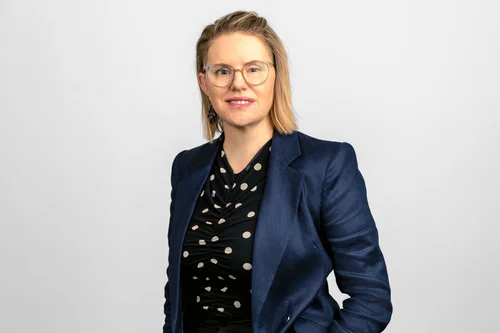
Hannah McPierzie is an internationally recognised presenter and educator who combines her outstanding skills as a teacher with her lived experience of deafblindness.
Women living with disability are more likely to experience social isolation. Hannah McPierzie shares how disability can reshape the way people connect and how small changes can make a big difference.
It’s human nature to be social and connect with others. Having a disability doesn’t negate that social hunger; it just makes it harder to find spaces and places that have us in mind.
The barriers for people with disability are often created by environments, communication systems, cost and limited inclusive opportunities, not by disability itself. The responsibility falls on us to make experiences accessible and that is a big burden.
People with disability are othered. We’re not the mainstream, so communities aren’t made with us in mind. I think it’s important to highlight that meaningful social connection is not simply about being around other people. It’s about belonging, reciprocity, choice and feeling valued.
ConnectUp is a free platform that helps people impacted by disability build connections. Carers were included in the development of ConnectUp because they can also experience significant barriers to maintaining their own social connections. We also had carers with disability in our group.
Women living with disability are diverse and their experiences may also be shaped by caring responsibilities, culture, sexuality, location and socioeconomic circumstances.
Acquired disability is also a complex mix of feelings. You’re trying to find a tether back to your world, but then finding what you used to enjoy doing is no longer accessible, and that compounds the feelings of isolation and grief.
I was a teacher of students with disability and living an able-bodied lifestyle. Then, in my late 20s, I was diagnosed with neurofibromatosis type 2, a rare condition that causes tumours to grow on the nervous system. The surgeries that followed left me profoundly deaf and navigating significant multisensory loss.
It was a huge shift, not only in how I communicated and moved through the world, but in how I saw myself. After the immediate medical challenges passed, social connection became essential. Finding community helped me move from isolation and grief towards belonging, advocacy and purpose.

Finding community helped me move from isolation and grief towards belonging, advocacy and purpose.
Some of my friends learned sign language to help me keep up in conversations, or to include me if we were going somewhere public. But ordinary things like going to the movies, seeing a concert, doing a yoga class, going for a bike ride – these all became so difficult and inaccessible.
A good friend of mine set up a safe space in her house, where I could go and lie down with a book or a colouring activity, while the others played board games and chatted. I could come out and join, but I had my nest to retreat to when it was too tiring. This was so important and kept me tethered to the world.
Finding community helped me move from isolation and grief towards belonging, advocacy and purpose.
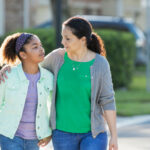
Staying connected could be something as simple as walking in the park with a friend. But if you don’t have a big support network and you need assistance leaving the house, that becomes a big task.
For some people, it could be doing an activity in parallel with others, not necessarily doing a team sport. I could take my craft project to the local library and sit alongside other people doing drawing or reading or knitting. We might not speak, but that connection is present and I feel safe. You might not get it right straight away and you might not find a group that is dedicated to your disability, but you will find your tribe.
You might not get it right straight away and you might not find a group that is dedicated to your disability, but you will find your tribe.
Alternatively, someone could join the local bowls club and get to know other bowlers and learn a new skill. It can look different, but getting the social connection is the common thread. You might not get it right straight away and you might not find a group that is dedicated to your disability, but you will find your tribe.
People often think we all only want to be mates with other disabled folk, rather than having a more inclusive society which allows for cross-sectional experiences.
ConnectUp Australia is available on the app store or online. I’d encourage people to get online and check it out. The platform aims to make it easier to find likeminded people, accessible activities, venues and local opportunities to be active.
I would encourage people to start small, focus on something they genuinely enjoy, explore peer-led communities and remember that it is OK to connect in ways that work for them.