














-
Author:
-
Read time:5 min
Team

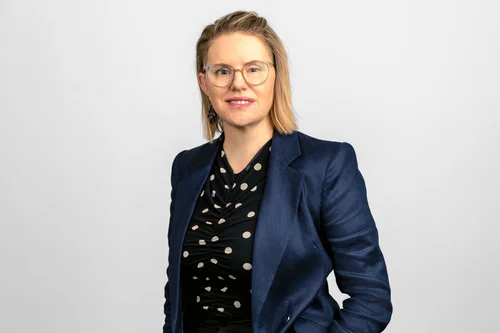
Kate Brouwer
Melbourne-based ceramic and floral artist
Health information for Aboriginal and Torres Strait Islander women.
After a multiple sclerosis diagnosis, Kate Brouwer had to find new ways to slow down and protect her energy without giving up what she loved.
Before my diagnosis, making myself breakfast, dropping my kids off to school, quickly tidying the house and arriving at work, didn’t feel like a huge burden.
Now they equate to an energy expense and come at a cost of something else at a higher priority. I have to think about it and make choices in order to survive the day ahead.
The start of the day can exhaust me before I even start doing things other people would deem productive. It’s a huge difference from how I used to operate.
It’s difficult because society doesn’t always have space for people with chronic illness to act out their lives in a way that feels manageable and kind.
Multiple sclerosis (MS) is a chronic illness that stops your brain sending messages to other parts of your body. Symptoms can include loss of mobility, vision problems, pain and tiredness. It is most common in women. For more information and support, visit MS Australia.
If I don’t protect my energy levels, I’m the one who suffers most. I’m juggling 3 different business avenues, young children, my own energy and health, a messy backyard workshop project, a desire to slow down and a requirement to keep up.
Some days I sort the laundry while sitting on the floor in front of the washing machine because my body won’t let me stand up.
Being my own boss in some ways has been a fantastic experience because I’ve been able to listen to my body and say: ‘I’m tired today, I can’t show up.’ I can take work in the moments I feel well enough.
But it has made it harder to take breaks as well. Even if I’ve been in hospital or when I was getting diagnosed, I couldn’t always keep the laptop closed. I had to answer to staff and do payroll. Those things don’t stop.
As much as I can, I prioritise living my life without feeling absolutely drained. That means making choices, taking days off and doing things for myself. The alternative is I work and parent and exist in a realm of complete and utter exhaustion. You need to back yourself.
Pre-chronic illness, my goals mirrored those of an ambitious over-achiever. A focus on high productivity bled into other parts of my life to the point where I didn’t even know how to relax in my own home. That hustle culture didn’t have space for people with chronic illness. We still have goals, but they might look different.
That hustle culture didn’t have space for people with chronic illness. We still have goals, but they might look different.
Now I focus on finding enjoyment in the day-to-day. I want space to enjoy quality time with others and to not feel exhausted at the end of each day.
It’s helpful to have a lens to filter your decisions through and to think about what is important to you. What do I want to get out of life? What’s the goal here? And that might have changed a lot from when you were younger.
You need to be mindful of mapping out realistic goals and expectations. There’s a list of questions I ask myself when faced with the juggle of motherhood, ambition and chronic illness:
The most important thing for me is ensuring I have energy to enjoy my family and be the mother I want to be.
I realise now that I’ve already been through a major transition once. When I became a mother I realised that I had to make choices and I had to prioritise.
When I got my diagnosis, I had just had a second baby and I realised that if I didn’t adjust my life enough, I was going to crash. I’m now working towards simplifying my life as much as possible again, so the only things left on my plate are things I actually want to do.
That means saying no to a lot of things and just focusing on: What do I want to do today and what do I want to do tomorrow?
I try not to put more than one important thing on my plate per day so if I have no energy, I can at least show up to one thing.
I also ensure I’ve scheduled at least 2 days in the week where I don’t have to leave the house. And those are things I didn’t used to think about. Now there has to be more structure to find a rhythm of rest.
Learning to ask for help has been very new for me, I used to be the one that helped others. My husband travels a lot for work, so I need help, I can’t get through my week alone.
I think the fear of burdening others is a real thing for so many of us, but the reality of asking for help is that people love to be in community with each other and support in practical ways. All we need do is ask.
When I speak to other women who have chronic illness, there’s an understood narrative about how much we battle fatigue. And how destructive that fatigue can be when the narrative is that it is lazy to rest.
I think we all need to slow down. There’s a lot that can be learned from people with chronic illness. We could all offer our bodies a bit more gentleness, less need to keep up and less need to say yes all the time.