















-
Related Topics
-
Author:
-
Read time:4 min
Team
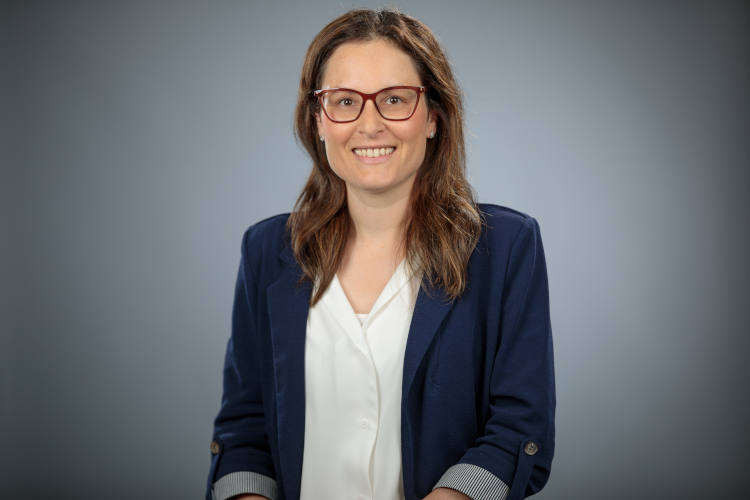
Kate Cross
Health Writer at Jean Hailes for Women's Health
Health information for Aboriginal and Torres Strait Islander women.
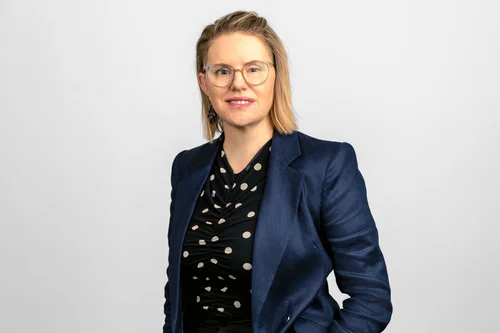
Jenny Lyons is a Winter Olympian, World Cup medallist, mum of 2 and businesswoman. This Women’s Health Week, she talks to our health writer Kate Cross about breaking barriers, backing yourself and why perimenopause was a major part of her latest Olympic comeback.
Jenny Lyons isn’t afraid to take risks or challenge expectations. Tell her she can’t do something, and it ignites a fire in her belly.
“I’ve always had this mentality – it’s like that quote [from poet Erin Hanson]: ‘What if I fall?… Oh but my darling… what if you fly?’,” she says. “That’s me to a tee.”
The 48-year-old recalls her early years as an athlete when she would progress to higher levels in competitions. “You constantly had to prove yourself to those athletes and coaches. You constantly got laughed at, like ‘Oh, Australia, they’re going to be hopeless’ …
“While it was sometimes quite tiring and frustrating, it really kept me motivated to show them that I could ski.”
There’s no doubt Jenny can ski. The 3-time Winter Olympian and multiple World Cup medallist has made multiple comebacks to elite snow sports following injury and retirement. Last year, she set her sights on the 2026 Winter Games at age 47 – more than a decade after she last competed. She didn’t quite make it due to a lack of funding. But, she helped redefine what elite sport looks like for women, including older athletes.
She also learnt a lot about the power of hormones at midlife.
You wouldn’t think that perimenopause and the Olympics have anything in common. But looking back, Jenny says the mental impacts of perimenopause were a major reason she took a break from her corporate job and returned to the slopes in her late 40s.
“I knew I was going through perimenopause, but I didn’t know what that meant … I just thought I was at a stage in my life where I had had enough and I wanted something different; I wanted something for me.
“I didn’t know that what I was doing [or feeling] was because my hormones were running all over the place.”
Jenny describes the “complete mental side” of perimenopause she didn’t know affected some midlife women. It’s that feeling “where everyone in your life is doing the wrong thing. You’re sick of it, you’re sick of them … to the point where you upend your life”, she says.
“I always wanted to have another crack [at the Olympics]. I’ve always felt like I still could have been competitive, but I don’t know if I would have actually done it if I wasn’t deep, deep in perimenopause.
“It was quite disruptive to my home life, family life, work life, everything life.”
Jenny says that it wasn’t until she returned from sport, spoke to her doctor and stumbled across other women’s stories that she realised menopausal hormone changes can impact mental health in some women.
“I didn’t know … [but] once I understand something, I’m able to process it.
“Now I understand it’s all actually a part of what my body’s going through. It’s easier now to give myself a break and acknowledge that it can cause so much chaos.”
Jenny says that menopausal hormone therapy has “helped a lot”.
And it hasn’t dampened her drive – her latest role is coaching other budding skiers.
As an athlete, staying motivated is a big part of the job. So what’s Jenny’s secret?
“I guess it’s always [looking at] the bigger picture. Like everyone, you have the days where you don’t want to go to work, or you don’t want to go to the gym, or you don’t want to do anything, you just want to have a day to yourself. I would have probably given myself those days and not felt too bad about it.”
But, she adds, setting goals, problem solving and moving on from losses “pretty quickly” is key.
“There’d be some races where you just completely sucked at the start of the year and it was just devastation. It was like someone broke up with you and you just had this massive hole in your heart and stomach … But, you’d wake up the next day and … reset.”
Jenny is big on surrounding herself with people who back her – and she encourages other women to do the same.
“There’s always these people that like to pull you down, say you can’t do that, or don’t believe in [you],” she says.
“Be around people that inspire you [and] … empower you to do what you want in life. Have the guts to not let [the naysayers] hold you back.”
After all, she says: “I’d rather try and fail than have never known what I was capable of.”
Learn more about changes in mental and emotional health in menopause and midlife