


















-
Related Topics
-
Date added:September 11 2024
-
Read time:5 min
The toilet mightn’t be your favourite spot in the house, but it’s a great place to check in on your bowel health. But what exactly should you do when it comes to your poo?
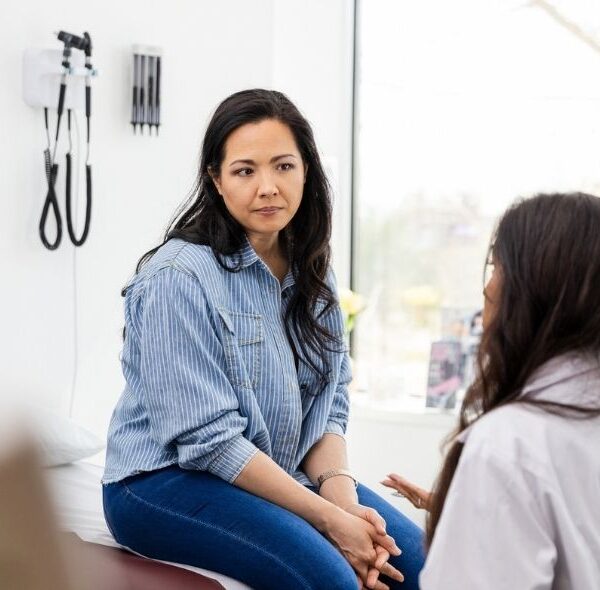
In this Q&A, Bowel Cancer Australia’s Dr Penelope De Lacavalerie (pictured below) explains how to be bowel aware, what to look out for and why we should all be checking our poo.
Why is it important for women to get to know their bowel health?
Dr De Lacavalerie: We all have different bowel habits. Some people poo 3 times a day, others go 3 times a week, then there’s everything in between. Knowing what’s normal for you can help you recognise when things aren’t normal and you need to see a doctor.
How can women become more aware of their bowel health?
Dr De Lacavalerie: Start by getting to know your poo. Every time you do one, look at the toilet bowl and any paper you’ve used for wiping. Try to notice your poo’s colour, shape and consistency. Also pay attention if your bowel habits change, and ask yourself why that might be. Have you eaten something different, for example? It’s about getting to know how your body works.
What’s normal when it comes to poo?
Dr De Lacavalerie: The perfect poo is light to dark brown and sausage-shaped. It can be smooth or cracked on the surface, but it’s soft and easy to pass without much straining. It also comes out in one or 2 pieces instead of in pellets or as a liquid.
The bowel is a tube that stretches from your stomach to your bottom (anus). It’s divided into the small bowel (small intestine) and large bowel (large intestine). When food passes through, your bowel absorbs nutrients and liquid and turns what’s leftover into waste (poo).
Bowel cancer is the third leading cause of cancer deaths in women.
What changes should women be looking out for to protect themselves from bowel cancer?
Dr De Lacavalerie: When you’re on the lookout for worrying changes, try to remember the word ‘BOWEL’:
- B stands for blood in your poo or on the toilet paper when wiping. It doesn’t matter how much there is or what colour it is (it could be bright red to black), it’s never normal.
- O is an obvious change in bowel habits that persists. It might be ongoing constipation you can’t explain or slimy, snotty diarrhoea.
- W is for weight loss and/or a loss of appetite you can’t explain.
- E is for extreme tiredness you can’t solve with a good night’s sleep. Very low iron levels can also be a warning sign (and cause fatigue).
- L stands for lump or swelling in your abdomen (belly). You might also have pain in your abdomen or when going to the toilet.
If you notice any of these changes, remember you know your body best and it’s important to speak up. Talk to your doctor about whether it’s worth getting a colonoscopy. It’s a procedure that looks at the lining of your bowel.
How worried should you be about bowel cancer if you spot any of these changes?
Dr De Lacavalerie: Most people who notice these changes don’t end up having bowel cancer, but some do, so it’s important to get any change checked by a doctor. Sometimes, symptoms are caused by other health issues like endometriosis or haemorrhoids (swellings) in the bottom.
Throughout life, women can also experience natural bowel changes. Think of pregnancy and menopause when your pelvic floor muscles can weaken and affect bowel control.
Still, bowel cancer happens at any age and affects one in 16 women so if you notice a change, don’t ignore it. The good news is it’s 99% curable if it’s caught early.
Are bowel cancer screening tests an essential piece of the bowel health puzzle?
Dr De Lacavalerie: Yes! Between ages of 50 to 74, eligible Australians get a free bowel test kit in the mail every 2 years. People aged 45 to 49 can now request their first bowel test kit via the National Bowel Cancer Screening website.
You do the test at home to check for blood in your poo that you cannot see. Unfortunately, only 40% of people complete the test, so if you’re eligible, don’t put it off.
Women with a higher risk of bowel cancer may need to screen earlier and more often. This includes women with bowel polyps (small growths), inflammatory bowel disease (for example, Crohn’s disease or ulcerative colitis) or a family history of bowel cancer. Chat to your doctor about what’s right for you.
Also, if between tests you notice any bowel health changes like the ones I mentioned earlier, please don’t try to explain them away or wait until your next scheduled appointment or bowel screening test. Instead, tell your doctor as soon as possible.
Up to date with your health checks? Find out now with Her Health Check.
How else can women protect themselves from bowel cancer?
Dr De Lacavalerie: With a healthy lifestyle and the right screening, around 60% of bowel cancer cases are preventable. If you can, share any family history of bowel cancer and bowel polyps with your doctor.
Exercise regularly and consume enough fibre, wholegrains and dairy products (or calcium supplements). Also, limit your alcohol intake, don’t smoke and try to avoid eating red meat more than 3 times a week.
Lastly, ask your doctor about the benefits and risks of taking aspirin. There is evidence it can lower your chance of bowel cancer by reducing the risk of forming polyps. But, it’s not suitable for everyone and needs an informed conversation with your doctor.
Dr Penelope De Lacavalerie is a Sydney-based colorectal surgeon and official Bowel Cancer Australia spokesperson. For more information about bowel cancer and how to prevent it, visit bowelcanceraustralia.org.
Related Articles

Women’s Health Week in the outback – taking to the skies with the Royal Flying Doctor Service
Menopause • Breast health • Periods • 4 min
New Endometriosis Management Plan puts women at the centre
Endometriosis • Persistent pelvic pain • 3 min
Are you eating enough? The everyday signs you’re running on empty
Nutrition and healthy eating as you age • 5 min


The exercise gap – Why women are moving less
Staying active as you age • 4 min