


















-
Reviewed
-
Reviewed by:
-
Last updated:May 20 2026
-
Last reviewed:May 20 2026
For the most up to date information on this topic, please visit jeanhailes.org.au
Key takeaways
- Testosterone is a hormone that is made in both men’s and women’s bodies.
- Testosterone levels do not drop suddenly during perimenopause or at menopause. Women’s testosterone levels drop slowly between the ages of about 20 and 60 years.
- Testosterone therapy may help postmenopausal women who have low libido that is causing them distress and has been present for at least several months
- There is not enough evidence to recommend testosterone therapy for any other menopausal symptoms or for general wellbeing
What is testosterone?
Testosterone is a hormone that is made in women’s bodies in smaller amounts than in men’s bodies. It has several roles in the body. Some of the testosterone produced is changed into estrogen in both women and men. However, the use of testosterone therapy only has a limited role.
How do testosterone levels change over a woman’s life?
In women, testosterone levels gradually get lower with age. They drop by about a quarter between the ages of 18 and 39 years, and another quarter between the ages of 40 and 59 years.
In other words, they drop by about half between your late teens and your late 50s. Then they start to gently rise again from your 60s.
You might have heard that women’s testosterone levels drop significantly when they reach menopause, but this is not true. At menopause, estrogen and progesterone drop significantly.
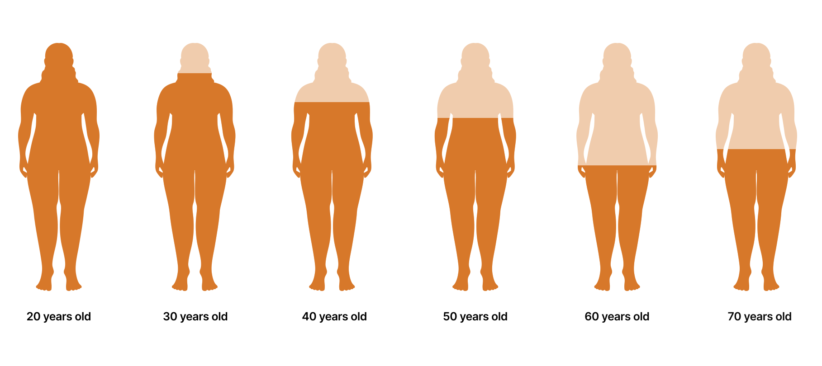
Women’s changing testosterone levels over time
Is testosterone therapy an effective treatment for low libido?
After menopause (when you are postmenopausal), you may have low libido (less desire for sex) and this can be upsetting or concerning. For example, it might be making you feel frustrated, worried, sad or angry. When this lasts for at least several months, health professionals call this hypoactive sexual desire dysfunction (HSDD) or hypoactive sexual desire disorder.
For postmenopausal women diagnosed with HSDD, evidence shows testosterone therapy can:
- increase sexual desire and arousal
- increase the likelihood of having an orgasm.
As a result, women may feel less stress or worry about their sex life and sexual wellbeing.
If you have low libido but you’re not worried about it, treatment is not needed.
Does testosterone therapy help with low libido before menopause?
There is not enough evidence to support using testosterone to treat sexual concerns in women before menopause and during perimenopause.
Is testosterone therapy helpful for brain fog, mood, general wellbeing or bone or muscle health?
Although some women may find testosterone can help with menopausal symptoms, such as brain fog, depression and hot flushes, or to improve general wellbeing and bone or muscle health, it’s important to know that there is currently not enough evidence to recommend its use for any of these symptoms or areas of health.
The current research shows that testosterone can help postmenopausal women experiencing low libido that is upsetting or concerning to them and lasts at least several months.
But more research is needed to show if it can help with:
- low mood
- brain fog
- general wellbeing
- bone or muscle health
- hot flushes and night sweats.
Testosterone therapy and the evidence
In this video, Professor Susan Davis AO talks about testosterone therapy for symptoms such as brain fog and fatigue, and what the current evidence shows.
Duration: 2 min 53 sec
Speaker: Dr Sarah White, CEO, Jean Hailes for Women’s Health
Professor Susan Davis, Renee from Victoria has asked, “Can testosterone therapy help with brain fog, libido, and other menopause symptoms?”
Professor Susan Davis:
So what we know about testosterone as a therapy is it can be very effective for the treatment of low libido, but presently there is no substantial evidence that it can be effective for symptoms like fatigue, brain fog, and any other conditions or symptoms.
Dr Sarah White:
There seemed to be a lot of claims being made about testosterone therapy on social media, which might’ve prompted Renee’s question. Where can people go for good information and how do people know who to trust when they read these conversations online?
Professor Susan Davis:
There’s an enormous amount of controversy about testosterone therapy for women. So in 2019, experts from around the world, without any pharmaceutical company support, got together and discussed what is the true evidence of benefit of testosterone for women and safety. And the consensus was that testosterone can be effective for the treatment of low libido and postmenopausal women, but the evidence is lacking that it will be beneficial for any other symptoms like brain fog or fatigue or muscle weakness or to prevent any disease like dementia or heart disease. And this is all written down in the document that’s available free on the International Menopause Society website.
Dr Sarah White:
Are these sorts of consensus statements updated as more evidence comes to light, Sue?
Professor Susan Davis:
This consensus statement will be updated, but I can assure you, having just gone through the entire literature published since 2019, there is no new evidence that in fact testosterone will be beneficial for anything other than low desire that causes a woman distress.
Dr Sarah White:
That’s a really important point I think you’ve just made. Low libido, so a lack of sexual desire that causes distress. Why do you add that causes distress on the end?
Professor Susan Davis:
So we know that about 95% of women over the age of 70 have low sexual desire, but it doesn’t bother them. Whereas we know that one in three women at midlife have low sexual desire that indeed bothers them. So when we use the word distress, I’m using the word to describe that it bothers the woman and she would like to do something about it. And in that context, testosterone has been found to be helpful for most about 60%, but not all women.
END OF TRASNCRIPT
Professor Susan Davis, Renee from Victoria has asked, “Can testosterone therapy help with brain fog, libido, and other menopause symptoms?”
Professor Susan Davis:
So what we know about testosterone as a therapy is it can be very effective for the treatment of low libido, but presently there is no substantial evidence that it can be effective for symptoms like fatigue, brain fog, and any other conditions or symptoms.
Dr Sarah White:
There seemed to be a lot of claims being made about testosterone therapy on social media, which might’ve prompted Renee’s question. Where can people go for good information and how do people know who to trust when they read these conversations online?
Professor Susan Davis:
There’s an enormous amount of controversy about testosterone therapy for women. So in 2019, experts from around the world, without any pharmaceutical company support, got together and discussed what is the true evidence of benefit of testosterone for women and safety. And the consensus was that testosterone can be effective for the treatment of low libido and postmenopausal women, but the evidence is lacking that it will be beneficial for any other symptoms like brain fog or fatigue or muscle weakness or to prevent any disease like dementia or heart disease. And this is all written down in the document that’s available free on the International Menopause Society website.
Dr Sarah White:
Are these sorts of consensus statements updated as more evidence comes to light, Sue?
Professor Susan Davis:
This consensus statement will be updated, but I can assure you, having just gone through the entire literature published since 2019, there is no new evidence that in fact testosterone will be beneficial for anything other than low desire that causes a woman distress.
Dr Sarah White:
That’s a really important point I think you’ve just made. Low libido, so a lack of sexual desire that causes distress. Why do you add that causes distress on the end?
Professor Susan Davis:
So we know that about 95% of women over the age of 70 have low sexual desire, but it doesn’t bother them. Whereas we know that one in three women at midlife have low sexual desire that indeed bothers them. So when we use the word distress, I’m using the word to describe that it bothers the woman and she would like to do something about it. And in that context, testosterone has been found to be helpful for most about 60%, but not all women.
END OF TRASNCRIPT
What to do if you’re considering testosterone therapy
Many things can affect your sex drive, including relationship issues, depression, stress, some medications, poor sleep, vaginal dryness and your general health.
If you have low libido and you’re concerned about it, see a doctor to talk about your symptoms. A doctor can help you work out what might be causing your low libido.
Your doctor can also help you decide which treatments are most likely to help you. This may or may not include testosterone therapy. For example, you might benefit from counselling, getting help with your sleep or changing your medicines.
You may need to try a few different things to find what works best for you.
Testosterone therapy might help you if:
- you are postmenopausal
- you lack desire for or interest in sex
- and the lack of interest in sex is distressing you.
What if testosterone therapy isn’t right for me?
No single treatment is right for everybody. We don’t know yet if testosterone is safe for all women. For example, it’s not known if it’s safe to take if you’ve had a hormone-sensitive breast cancer.
Also, testosterone might not help if there are other reasons for your low libido. Options that might improve your sexual wellbeing include:
- menopausal hormone therapy if you have hot flushes or night sweats
- managing vaginal dryness
- relationship counselling
- managing sleep problems
- dealing with stress
- changing your medicines
- support for your mental and emotional health.
Ways to support libido
Watch a video of Professor Sheryl Kingsberg, Clinical Psychologist at University Hospitals Cleveland Medical Center in USA, talking about how women can boost their libido.
Duration: 2 min 19 sec
Are there things a women can do to boost her libido before talking to your doctor?
Speaker: Sarah White, CEO, Jean Hailes for Women’s Health
Now, questions on the topic of libido naturally lead us to Professor Cheryl Kingsberg in the US. Professor Kingsberg, we have a question from Robin in Tasmania. Robin asks, “Are there things that a woman can do to help boost her libido before going to talk to her doctor about treatment?
Professor Sheryl Kingsberg:
Well, when we think about libido, think about spontaneous appetite, which is to put it simply feeling horny. It’s your spontaneous interest having appetite. And then there’s responsive desire, which is you may not have as much of that appetite that you had, but if you don’t overinterpret that, if you’re not constantly distracted by, why don’t I? And you can enjoy the process and enjoy response and desire, that’s also a way to shift your mindset about being sexual. For example, women in long-term relationships very rarely have that spontaneous passion at the mere side of their partner. If you’ve been with somebody for 20, 25 years, it’s hard to get that, “Oh my goodness, I can’t wait to get you into bed,” feeling. Sometimes you can, but on a daily basis, that’s a little harder than if you were in a new relationship. So it’s really actually the age of the relationship and not the age of the person in the relationship that makes a difference about that.
If you’re 65 and in a new relationship, you’re going to have that passion. But if you are 45 and in a long-term relationship, it’s a little bit more challenging. So one way is to recognise that and you have to put your own spontaneity into it, change things up a little, be a little bit more playful and innovative and novel, and that can be helpful. Not overinterpreting the fact that after a long day’s work and you’ve seen your partner every day for 20 years, that’s not going to be an easy fix to sensuality, certainly good health and exercise. We know actually that taking good care of your body with exercise can actually improve arousal, and that can also help with desire.
END TRANSCRIPT
Speaker: Sarah White, CEO, Jean Hailes for Women’s Health
Now, questions on the topic of libido naturally lead us to Professor Cheryl Kingsberg in the US. Professor Kingsberg, we have a question from Robin in Tasmania. Robin asks, “Are there things that a woman can do to help boost her libido before going to talk to her doctor about treatment?
Professor Sheryl Kingsberg:
Well, when we think about libido, think about spontaneous appetite, which is to put it simply feeling horny. It’s your spontaneous interest having appetite. And then there’s responsive desire, which is you may not have as much of that appetite that you had, but if you don’t overinterpret that, if you’re not constantly distracted by, why don’t I? And you can enjoy the process and enjoy response and desire, that’s also a way to shift your mindset about being sexual. For example, women in long-term relationships very rarely have that spontaneous passion at the mere side of their partner. If you’ve been with somebody for 20, 25 years, it’s hard to get that, “Oh my goodness, I can’t wait to get you into bed,” feeling. Sometimes you can, but on a daily basis, that’s a little harder than if you were in a new relationship. So it’s really actually the age of the relationship and not the age of the person in the relationship that makes a difference about that.
If you’re 65 and in a new relationship, you’re going to have that passion. But if you are 45 and in a long-term relationship, it’s a little bit more challenging. So one way is to recognise that and you have to put your own spontaneity into it, change things up a little, be a little bit more playful and innovative and novel, and that can be helpful. Not overinterpreting the fact that after a long day’s work and you’ve seen your partner every day for 20 years, that’s not going to be an easy fix to sensuality, certainly good health and exercise. We know actually that taking good care of your body with exercise can actually improve arousal, and that can also help with desire.
END TRANSCRIPT
What you need to know if you have been prescribed testosterone
In Australia, a testosterone cream has been approved to treat postmenopausal women who have low libido that is causing distress. If you and your doctor have decided testosterone therapy is right for you, your doctor will give you a prescription for it.
To use the cream, measure out the amount you’ve been prescribed with the applicator. Then gently massage it into dry, clean skin on either your buttock or your outer upper thigh until it’s absorbed. This usually takes about one minute. Afterwards, cover the area with clothing and wash your hands well with soap and water. Talk to your doctor or pharmacist if you have any questions.
You will usually have a blood test to check your testosterone levels:
- before starting treatment
- 3 weeks after you start treatment
- every 6 months while using the treatment.
It’s important to know that you may not notice any benefit from testosterone therapy until you’ve been using it every day for about 4 to 6 weeks.
Your doctor will see you regularly to check if treatment is helping and if you are getting any side effects. They might need to change the dose if your testosterone levels get too high or if you have side effects.
Treatment should be stopped if you do not get any benefit from it after 6 months.
Testosterone medicines designed for men should not be used. These medicines are too strong, and it is difficult to measure out a dose that is suitable for women.
Compounded testosterone creams (creams mixed by hand in some pharmacies) are not recommended. The dose strength can be unpredictable and uneven. These medicines are not regulated in Australia.
What are the potential side effects of testosterone therapy?
It’s important to monitor your testosterone levels if you’re having testosterone therapy.
Possible side effects of testosterone therapy include:
- weight gain (which is usually minor)
- acne
- increased body hair growth.
There are some other more serious side effects such as voice deepening, hair loss from the scalp or enlargement of the clitoris. However you should not experience them if your testosterone levels stay within the normal (reference) range for women.
More on blood test results
Doctors test testosterone levels in a blood sample and measure it in nanomoles per litre (nmol/l). Laboratories differ in the exact numbers they use, but the approximate range for women who have not reached menopause is somewhere between about 0.3 nmol/L and 1.8 nmol/L.
If you are wanting to continue testosterone treatment long term, it’s important to know that clinical trials of testosterone longer than 2 years are limited. However, testosterone cream, in a dose that’s suitable for women, has been used in Australia for over 20 years and no serious safety concerns have been reported. Your doctor can help you decide whether to continue treatment.
It’s important to follow your doctor’s instructions and contact your doctor if you have any concerns about your treatment.
How to talk to your doctor about testosterone therapy
Some women feel uncomfortable talking to a doctor about their sexual wellbeing. But doctors are used to managing sexual issues. You could start the conversation by saying something like, “I wanted to talk to you about a change (or changes) I’ve noticed since menopause.”
Questions you may want to ask include:
- What is the most likely cause of my symptoms?
- Is testosterone therapy appropriate for me?
- How much will it cost?
- When should I expect benefits?
- How will we monitor the safety of the therapy?
- What are the other treatment options?
If a doctor refuses to talk about testosterone or suggests testosterone therapy without explaining why or talking about possible risks, you might want to get a second opinion.
This information is based on medicines in Australia. Always follow medicine instructions and advice of your doctor, pharmacist or health professional.
Funded by the Australian Government through the Quality Use of Diagnostics, Therapeutics and Pathology Program.

Key takeaways
- Testosterone is a hormone that is made in both men’s and women’s bodies.
- Testosterone levels do not drop suddenly during perimenopause or at menopause. Women’s testosterone levels drop slowly between the ages of about 20 and 60 years.
- Testosterone therapy may help postmenopausal women who have low libido that is causing them distress and has been present for at least several months
- There is not enough evidence to recommend testosterone therapy for any other menopausal symptoms or for general wellbeing
What is testosterone?
Testosterone is a hormone that is made in women’s bodies in smaller amounts than in men’s bodies. It has several roles in the body. Some of the testosterone produced is changed into estrogen in both women and men. However, the use of testosterone therapy only has a limited role.
How do testosterone levels change over a woman’s life?
In women, testosterone levels gradually get lower with age. They drop by about a quarter between the ages of 18 and 39 years, and another quarter between the ages of 40 and 59 years.
In other words, they drop by about half between your late teens and your late 50s. Then they start to gently rise again from your 60s.
You might have heard that women’s testosterone levels drop significantly when they reach menopause, but this is not true. At menopause, estrogen and progesterone drop significantly.
Women’s changing testosterone levels over time
Is testosterone therapy an effective treatment for low libido?
After menopause (when you are postmenopausal), you may have low libido (less desire for sex) and this can be upsetting or concerning. For example, it might be making you feel frustrated, worried, sad or angry. When this lasts for at least several months, health professionals call this hypoactive sexual desire dysfunction (HSDD) or hypoactive sexual desire disorder.
For postmenopausal women diagnosed with HSDD, evidence shows testosterone therapy can:
- increase sexual desire and arousal
- increase the likelihood of having an orgasm.
As a result, women may feel less stress or worry about their sex life and sexual wellbeing.
If you have low libido but you’re not worried about it, treatment is not needed.
Does testosterone therapy help with low libido before menopause?
There is not enough evidence to support using testosterone to treat sexual concerns in women before menopause and during perimenopause.
Is testosterone therapy helpful for brain fog, mood, general wellbeing or bone or muscle health?
Although some women may find testosterone can help with menopausal symptoms, such as brain fog, depression and hot flushes, or to improve general wellbeing and bone or muscle health, it’s important to know that there is currently not enough evidence to recommend its use for any of these symptoms or areas of health.
The current research shows that testosterone can help postmenopausal women experiencing low libido that is upsetting or concerning to them and lasts at least several months.
But more research is needed to show if it can help with:
- low mood
- brain fog
- general wellbeing
- bone or muscle health
- hot flushes and night sweats.
Testosterone therapy and the evidence
In this video, Professor Susan Davis AO talks about testosterone therapy for symptoms such as brain fog and fatigue, and what the current evidence shows.
Duration: 2 min 53 sec
Speaker: Dr Sarah White, CEO, Jean Hailes for Women’s Health
Professor Susan Davis, Renee from Victoria has asked, “Can testosterone therapy help with brain fog, libido, and other menopause symptoms?”
Professor Susan Davis:
So what we know about testosterone as a therapy is it can be very effective for the treatment of low libido, but presently there is no substantial evidence that it can be effective for symptoms like fatigue, brain fog, and any other conditions or symptoms.
Dr Sarah White:
There seemed to be a lot of claims being made about testosterone therapy on social media, which might’ve prompted Renee’s question. Where can people go for good information and how do people know who to trust when they read these conversations online?
Professor Susan Davis:
There’s an enormous amount of controversy about testosterone therapy for women. So in 2019, experts from around the world, without any pharmaceutical company support, got together and discussed what is the true evidence of benefit of testosterone for women and safety. And the consensus was that testosterone can be effective for the treatment of low libido and postmenopausal women, but the evidence is lacking that it will be beneficial for any other symptoms like brain fog or fatigue or muscle weakness or to prevent any disease like dementia or heart disease. And this is all written down in the document that’s available free on the International Menopause Society website.
Dr Sarah White:
Are these sorts of consensus statements updated as more evidence comes to light, Sue?
Professor Susan Davis:
This consensus statement will be updated, but I can assure you, having just gone through the entire literature published since 2019, there is no new evidence that in fact testosterone will be beneficial for anything other than low desire that causes a woman distress.
Dr Sarah White:
That’s a really important point I think you’ve just made. Low libido, so a lack of sexual desire that causes distress. Why do you add that causes distress on the end?
Professor Susan Davis:
So we know that about 95% of women over the age of 70 have low sexual desire, but it doesn’t bother them. Whereas we know that one in three women at midlife have low sexual desire that indeed bothers them. So when we use the word distress, I’m using the word to describe that it bothers the woman and she would like to do something about it. And in that context, testosterone has been found to be helpful for most about 60%, but not all women.
END OF TRASNCRIPT
Professor Susan Davis, Renee from Victoria has asked, “Can testosterone therapy help with brain fog, libido, and other menopause symptoms?”
Professor Susan Davis:
So what we know about testosterone as a therapy is it can be very effective for the treatment of low libido, but presently there is no substantial evidence that it can be effective for symptoms like fatigue, brain fog, and any other conditions or symptoms.
Dr Sarah White:
There seemed to be a lot of claims being made about testosterone therapy on social media, which might’ve prompted Renee’s question. Where can people go for good information and how do people know who to trust when they read these conversations online?
Professor Susan Davis:
There’s an enormous amount of controversy about testosterone therapy for women. So in 2019, experts from around the world, without any pharmaceutical company support, got together and discussed what is the true evidence of benefit of testosterone for women and safety. And the consensus was that testosterone can be effective for the treatment of low libido and postmenopausal women, but the evidence is lacking that it will be beneficial for any other symptoms like brain fog or fatigue or muscle weakness or to prevent any disease like dementia or heart disease. And this is all written down in the document that’s available free on the International Menopause Society website.
Dr Sarah White:
Are these sorts of consensus statements updated as more evidence comes to light, Sue?
Professor Susan Davis:
This consensus statement will be updated, but I can assure you, having just gone through the entire literature published since 2019, there is no new evidence that in fact testosterone will be beneficial for anything other than low desire that causes a woman distress.
Dr Sarah White:
That’s a really important point I think you’ve just made. Low libido, so a lack of sexual desire that causes distress. Why do you add that causes distress on the end?
Professor Susan Davis:
So we know that about 95% of women over the age of 70 have low sexual desire, but it doesn’t bother them. Whereas we know that one in three women at midlife have low sexual desire that indeed bothers them. So when we use the word distress, I’m using the word to describe that it bothers the woman and she would like to do something about it. And in that context, testosterone has been found to be helpful for most about 60%, but not all women.
END OF TRASNCRIPT
What to do if you’re considering testosterone therapy
Many things can affect your sex drive, including relationship issues, depression, stress, some medications, poor sleep, vaginal dryness and your general health.
If you have low libido and you’re concerned about it, see a doctor to talk about your symptoms. A doctor can help you work out what might be causing your low libido.
Your doctor can also help you decide which treatments are most likely to help you. This may or may not include testosterone therapy. For example, you might benefit from counselling, getting help with your sleep or changing your medicines.
You may need to try a few different things to find what works best for you.
Testosterone therapy might help you if:
- you are postmenopausal
- you lack desire for or interest in sex
- and the lack of interest in sex is distressing you.
What if testosterone therapy isn’t right for me?
No single treatment is right for everybody. We don’t know yet if testosterone is safe for all women. For example, it’s not known if it’s safe to take if you’ve had a hormone-sensitive breast cancer.
Also, testosterone might not help if there are other reasons for your low libido. Options that might improve your sexual wellbeing include:
- menopausal hormone therapy if you have hot flushes or night sweats
- managing vaginal dryness
- relationship counselling
- managing sleep problems
- dealing with stress
- changing your medicines
- support for your mental and emotional health.
Ways to support libido
Watch a video of Professor Sheryl Kingsberg, Clinical Psychologist at University Hospitals Cleveland Medical Center in USA, talking about how women can boost their libido.
Duration: 2 min 19 sec
Are there things a women can do to boost her libido before talking to your doctor?
Speaker: Sarah White, CEO, Jean Hailes for Women’s Health
Now, questions on the topic of libido naturally lead us to Professor Cheryl Kingsberg in the US. Professor Kingsberg, we have a question from Robin in Tasmania. Robin asks, “Are there things that a woman can do to help boost her libido before going to talk to her doctor about treatment?
Professor Sheryl Kingsberg:
Well, when we think about libido, think about spontaneous appetite, which is to put it simply feeling horny. It’s your spontaneous interest having appetite. And then there’s responsive desire, which is you may not have as much of that appetite that you had, but if you don’t overinterpret that, if you’re not constantly distracted by, why don’t I? And you can enjoy the process and enjoy response and desire, that’s also a way to shift your mindset about being sexual. For example, women in long-term relationships very rarely have that spontaneous passion at the mere side of their partner. If you’ve been with somebody for 20, 25 years, it’s hard to get that, “Oh my goodness, I can’t wait to get you into bed,” feeling. Sometimes you can, but on a daily basis, that’s a little harder than if you were in a new relationship. So it’s really actually the age of the relationship and not the age of the person in the relationship that makes a difference about that.
If you’re 65 and in a new relationship, you’re going to have that passion. But if you are 45 and in a long-term relationship, it’s a little bit more challenging. So one way is to recognise that and you have to put your own spontaneity into it, change things up a little, be a little bit more playful and innovative and novel, and that can be helpful. Not overinterpreting the fact that after a long day’s work and you’ve seen your partner every day for 20 years, that’s not going to be an easy fix to sensuality, certainly good health and exercise. We know actually that taking good care of your body with exercise can actually improve arousal, and that can also help with desire.
END TRANSCRIPT
Speaker: Sarah White, CEO, Jean Hailes for Women’s Health
Now, questions on the topic of libido naturally lead us to Professor Cheryl Kingsberg in the US. Professor Kingsberg, we have a question from Robin in Tasmania. Robin asks, “Are there things that a woman can do to help boost her libido before going to talk to her doctor about treatment?
Professor Sheryl Kingsberg:
Well, when we think about libido, think about spontaneous appetite, which is to put it simply feeling horny. It’s your spontaneous interest having appetite. And then there’s responsive desire, which is you may not have as much of that appetite that you had, but if you don’t overinterpret that, if you’re not constantly distracted by, why don’t I? And you can enjoy the process and enjoy response and desire, that’s also a way to shift your mindset about being sexual. For example, women in long-term relationships very rarely have that spontaneous passion at the mere side of their partner. If you’ve been with somebody for 20, 25 years, it’s hard to get that, “Oh my goodness, I can’t wait to get you into bed,” feeling. Sometimes you can, but on a daily basis, that’s a little harder than if you were in a new relationship. So it’s really actually the age of the relationship and not the age of the person in the relationship that makes a difference about that.
If you’re 65 and in a new relationship, you’re going to have that passion. But if you are 45 and in a long-term relationship, it’s a little bit more challenging. So one way is to recognise that and you have to put your own spontaneity into it, change things up a little, be a little bit more playful and innovative and novel, and that can be helpful. Not overinterpreting the fact that after a long day’s work and you’ve seen your partner every day for 20 years, that’s not going to be an easy fix to sensuality, certainly good health and exercise. We know actually that taking good care of your body with exercise can actually improve arousal, and that can also help with desire.
END TRANSCRIPT
What you need to know if you have been prescribed testosterone
In Australia, a testosterone cream has been approved to treat postmenopausal women who have low libido that is causing distress. If you and your doctor have decided testosterone therapy is right for you, your doctor will give you a prescription for it.
To use the cream, measure out the amount you’ve been prescribed with the applicator. Then gently massage it into dry, clean skin on either your buttock or your outer upper thigh until it’s absorbed. This usually takes about one minute. Afterwards, cover the area with clothing and wash your hands well with soap and water. Talk to your doctor or pharmacist if you have any questions.
You will usually have a blood test to check your testosterone levels:
- before starting treatment
- 3 weeks after you start treatment
- every 6 months while using the treatment.
It’s important to know that you may not notice any benefit from testosterone therapy until you’ve been using it every day for about 4 to 6 weeks.
Your doctor will see you regularly to check if treatment is helping and if you are getting any side effects. They might need to change the dose if your testosterone levels get too high or if you have side effects.
Treatment should be stopped if you do not get any benefit from it after 6 months.
Testosterone medicines designed for men should not be used. These medicines are too strong, and it is difficult to measure out a dose that is suitable for women.
Compounded testosterone creams (creams mixed by hand in some pharmacies) are not recommended. The dose strength can be unpredictable and uneven. These medicines are not regulated in Australia.
What are the potential side effects of testosterone therapy?
It’s important to monitor your testosterone levels if you’re having testosterone therapy.
Possible side effects of testosterone therapy include:
- weight gain (which is usually minor)
- acne
- increased body hair growth.
There are some other more serious side effects such as voice deepening, hair loss from the scalp or enlargement of the clitoris. However you should not experience them if your testosterone levels stay within the normal (reference) range for women.
More on blood test results
Doctors test testosterone levels in a blood sample and measure it in nanomoles per litre (nmol/l). Laboratories differ in the exact numbers they use, but the approximate range for women who have not reached menopause is somewhere between about 0.3 nmol/L and 1.8 nmol/L.
If you are wanting to continue testosterone treatment long term, it’s important to know that clinical trials of testosterone longer than 2 years are limited. However, testosterone cream, in a dose that’s suitable for women, has been used in Australia for over 20 years and no serious safety concerns have been reported. Your doctor can help you decide whether to continue treatment.
It’s important to follow your doctor’s instructions and contact your doctor if you have any concerns about your treatment.
How to talk to your doctor about testosterone therapy
Some women feel uncomfortable talking to a doctor about their sexual wellbeing. But doctors are used to managing sexual issues. You could start the conversation by saying something like, “I wanted to talk to you about a change (or changes) I’ve noticed since menopause.”
Questions you may want to ask include:
- What is the most likely cause of my symptoms?
- Is testosterone therapy appropriate for me?
- How much will it cost?
- When should I expect benefits?
- How will we monitor the safety of the therapy?
- What are the other treatment options?
If a doctor refuses to talk about testosterone or suggests testosterone therapy without explaining why or talking about possible risks, you might want to get a second opinion.
This information is based on medicines in Australia. Always follow medicine instructions and advice of your doctor, pharmacist or health professional.
Funded by the Australian Government through the Quality Use of Diagnostics, Therapeutics and Pathology Program.
Review process
Our review process
This information has been reviewed by clinical experts and is based on the latest evidence.
Our content review process ensures our health information is accurate, trustworthy, current and useful.
We regularly check our information to make sure it reflects the latest clinical guidelines and key findings from large, reliable studies.
Where possible, we focus on Australian research to make our information more relevant locally.
Experts play a key role in reviewing our content. Clinicians at Jean Hailes check information for accuracy and real‑world relevance. These include GPs, gynaecologists, endocrinologists, psychologists and allied health professionals.
We also work with partner organisations, independent specialists and people with lived experience to make sure our content reflects both expert knowledge and the experiences of the community.
Reviewed by

Professor Susan R Davis AO
– MBBS FRACP PhD FAHMS– Head of Monash University Women’s Health Research Program
– Head of Women’s Endocrine Clinic, Alfred Hospital Melbourne
– Past President of Australasian Menopause Society
– Past President of International Menopause Society
Professor Davis played a key role reviewing this testosterone information to ensure it is accurate, trustworthy, current and useful.
These resources were developed by the Quality Use of Medicines Alliance, a group of 16 organisations that includes Jean Hailes for Women’s Health, the Royal Australian College of General Practitioners (RACGP) and the Pharmaceutical Society of Australia (PSA) amongst others.
As part of the process to develop this information, the members of the QUM Alliance conducted a rigorous assessment of the very latest evidence. The resources were then clinically reviewed by menopause experts and community tested with women in Australia.
We know that health is personal, and every woman’s experience is different. These resources are designed to support informed conversations between women and their healthcare providers, not to replace individual clinical judgement.
We are committed to continuously reviewing the latest evidence and updating our resources as the research evolves.