
















-
Read time:4 min
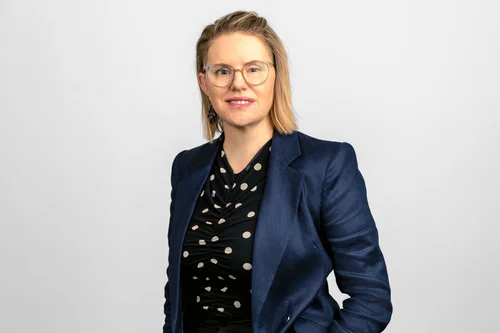
It took Hannah Bambra 5 years to receive a diagnosis of PMOS (formerly known as PCOS), but there were signs early on. The condition is different for everyone and ripe for misinformation. Here she shares how the new name will help people sort fact from fiction.
This year, polycystic ovarian syndrome (PCOS) was renamed to polyendocrine metabolic ovarian syndrome (PMOS). After decades of suffering through misunderstood symptoms, I think the name change is a step in the right direction.
When I first started getting periods, it would come for a full 2 weeks at a time. I was only 11 and quite small for my age. I loved swimming and playing sports. I considered myself a tomboy, but the flooding of my early periods made it hard to stay active.
My GP was also worried I might be losing too much blood. I was put on the Pill from about 12 or 13 years old to help control the heavy bleeds. Later, the Pill acted as a form of contraception, a habit and a way of knowing when my periods would come.
It wasn’t until I was about 25 that I realised I didn’t know much about my body or natural cycles. I started seeing claims that the Pill was a ‘band-aid’ for many conditions. I came off it and didn’t get my period for 6 months. I started feeling bloated and depressive as well.
Sorting fact from fiction
Not having a period for so long alerted me that something was wrong. I’m glad I came off the Pill to get more in touch with my natural cycles at that time, but that doesn’t mean the Pill is bad or doesn’t help.
Social media is still flooded with anti-choice campaigners who want to spread misinformation about birth control to limit women’s control over their bodies. I find this really upsetting, and it makes it harder to sort fact from fiction.
Through other stages of my life, when I haven’t wanted to be pregnant, hormonal birth control has effectively reduced my symptoms of PMOS.
But people often look to social media for help when they feel ignored by their health care professionals. Between the ages of 26 and 32, I asked several GPs for help to get a proper diagnosis. I felt like they weren’t listening, assumed I couldn’t afford the tests or just wanted to put me back on the Pill without helping to find the underlying cause.
The power of a new name
I pushed for an internal ultrasound and took myself to a specialist. He inserted the wand and said, “Vaginal walls: normal”, “Cervix: normal”, then stopped when he got to my ovaries. Having 20 or more immature follicles (small fluid-filled sacs) in each ovary is a sign of PMOS. At that time, I had up to 60 on each.
I was then formally diagnosed with PCOS, which we now call PMOS. While the diagnosis was upsetting to receive, it was also validating. What followed next was strange. I was referred to weight loss programs and given pamphlets about diabetes. I still regularly exercised and, if anything, I was under what is often deemed a healthy weight range.
Because I wasn’t ‘overweight’ at that time, I often wasn’t taken seriously when I said I had PCOS. The condition has long been tied to body weight, although this link is complex and not necessarily two-way.
People with a higher body weight can sometimes be more prone to developing the condition, but having the condition doesn’t necessarily mean you will be in a bigger body. This misconception has led to a delayed diagnosis for many.
I heard someone say they think the name is too long and too complicated. The condition itself is long and complicated, so any pause to understand its complexity feels like a good thing to me.”
Another misconception from the old name ‘polycystic ovarian syndrome’ is the link to cysts – rather than being cysts, these are immature follicles on the ovaries.
The new name recognises that this is a hormonal and metabolic condition. I heard someone say they think the name is too long and too complicated. The condition itself is long and complicated, so any pause to understand its complexity feels like a good thing to me. My hope is that medical journals and practices are having to reconsider what they think they know about PMOS. It’s an opportunity to skill up and look at the condition with new eyes.
Understanding the bigger picture
PMOS is a whole-of-body and life-long condition. For me, being diagnosed and then having the condition renamed, feels like all the parts of the puzzle fitting together. The thought and consideration that was put into the name change helps me feel like I am being seen as a whole person.
The name change won’t solve everything, but I hope it encourages more nuanced conversations about what PMOS really is. People with the condition deserve accurate information and timely diagnosis.
If the new name helps even one person recognise their symptoms earlier, ask better questions or feel less alone, then that’s a change worth celebrating.
Related Articles
Rest doesn’t have to be earned – a First Nations nurse on health, culture and self-care
Emotional wellbeing as you age • 4 min

How I rebuilt my life after acquiring a disability – Hattie’s story
Brain health • 4 min