














-
Read time:3 min
Endometriosis can impact your body, mind, studies, career, finances and so much more. For Kat Stanley, the condition “completely derailed” her life for about 20 years. Now in her 40s, Kat recalls the long road to her diagnosis and the treatments that have changed her life.

At Jean Hailes, we share women’s stories to raise awareness, drive change and help others feel less alone. This is Kat’s story. We acknowledge that every experience is different.
I was 15 or 16 when I had my first really painful period. By that, I mean I was in so much pain, I couldn’t walk down the hallway to tell my mum. I thought I was dying.
Mum took me to our doctor who told me it was retrograde (backwards) menstruation and that it would pass.
For the next few years, some of my periods would be OK and then others would be horrendously painful. I’d have vomiting too and would miss school and eventually uni. I ended up going part time at uni because the pain was so bad.
I went to a lot of emergency departments and got fobbed off and told that it was all in my head – all of the things that unfortunately people with endo still get told today. Although, I think it’s getting better.
I felt crazy. Why did I constantly need to use all of my sick leave? Why was I so unreliable? What was wrong with me?
I would do these deep dives on the internet trying to find answers, but I never once stumbled across the word endometriosis.
This continued until I was in my early 30s, trying – unsuccessfully – to get pregnant with the help of fertility treatment.
My IVF doctor, who was also a gynaecologist, happened to ask me if I had painful periods. I explained they were really painful and she asked why I’d never mentioned it before. I said other doctors had told me painful periods were normal, so I didn’t think it was relevant. That’s when she said: ‘I think you might have endometriosis.’
Learning to live well with endo
After getting an official diagnosis of endometriosis, I was lucky to go on and have kids.
But within a year of childbirth, my periods and the pain had returned. This time my periods were far heavier than ever before. I couldn’t be out of the house for more than an hour without bleeding through my clothes.
It turned out I had adenomyosis as well as endo. I discussed all of my options with my doctor and decided on a hysterectomy for quality of life.
For some people, endometriosis symptoms don’t improve after a hysterectomy. I was one of the lucky ones. The heavy bleeding stopped and my iron levels got better. But the pain didn’t go away.
That’s when I tried cognitive behavioural therapy (CBT), with the help of a therapist.
It totally changed my experience of pain and made it way easier to live with.
CBT helped me identify which of my behaviours and thoughts were helping me and which weren’t. Over time, I learnt to replace the unhelpful thoughts with more adaptive thoughts.
Learn more about cognitive behavioural therapy (CBT) and endometriosis pain.
I still have bad days, but they don’t take over my life like before.
My mission is to create some sort of lasting change so that the next generation won’t suffer in the same way that I did. It was 17 years that I was undiagnosed, but endometriosis completely derailed my life for about 20 years.
People feel really defeated when they find out they’ve got this illness with no cure. It’s awful and horrendous, but there are many things that we can do. My advice is to find a good support team, explore a mix of treatment options and learn as much as you can. I want others to know that you can live well with endo.
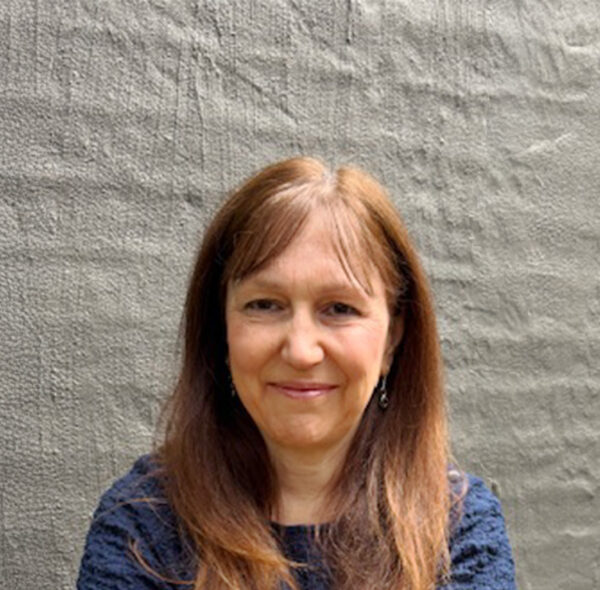
Kat Stanley is a provisional psychologist and pelvic pain advocate. She has helped with research on the benefits of cognitive behavioural therapy for endometriosis.
More information and support
Learn more about endometriosis, including the symptoms and treatment options. You can also find support through the Endometriosis Australia support group networks.