














-
Reviewed by:
-
Last updated:May 7 2026
-
Last reviewed:May 7 2026
Sections on this page
What are MHT patches?
Menopausal hormone therapy (MHT) is used to treat menopausal symptoms. There are different types of MHT, including MHT patches.
MHT patches are also called transdermal patches. Transdermal means the medicine is absorbed through the skin.
MHT patches are thin patches that stick to the skin and slowly release hormones into your body.
In Australia, patches are available as:
- oestrogen-only patches
- combined oestrogen + progestogen patches.
If you’ve had surgery to remove your uterus (a hysterectomy), oestrogen-only patches might be the only form of MHT you need. If you still have a uterus, you will also need another hormone called progestogen. This reduces the risk of endometrial cancer (cancer of the uterus).
Patches come in different strengths in individually sealed sachets. Your doctor will prescribe the right strength for you.
Patches are usually replaced twice a week.
You can get packs containing enough patches for several weeks.
How to use MHT patches
Before you start
It’s important to know which type of patch you need to use:
- oestrogen-only patch
- combined oestrogen + progestogen patch.
Talk to your doctor about when to use them. Learn more about how to take MHT.
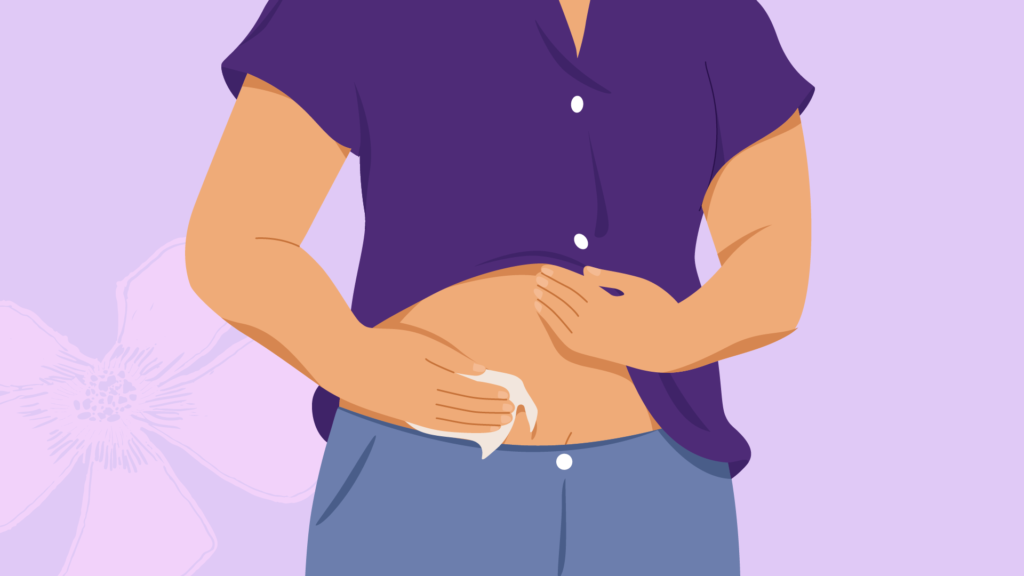
1. Prepare your skin
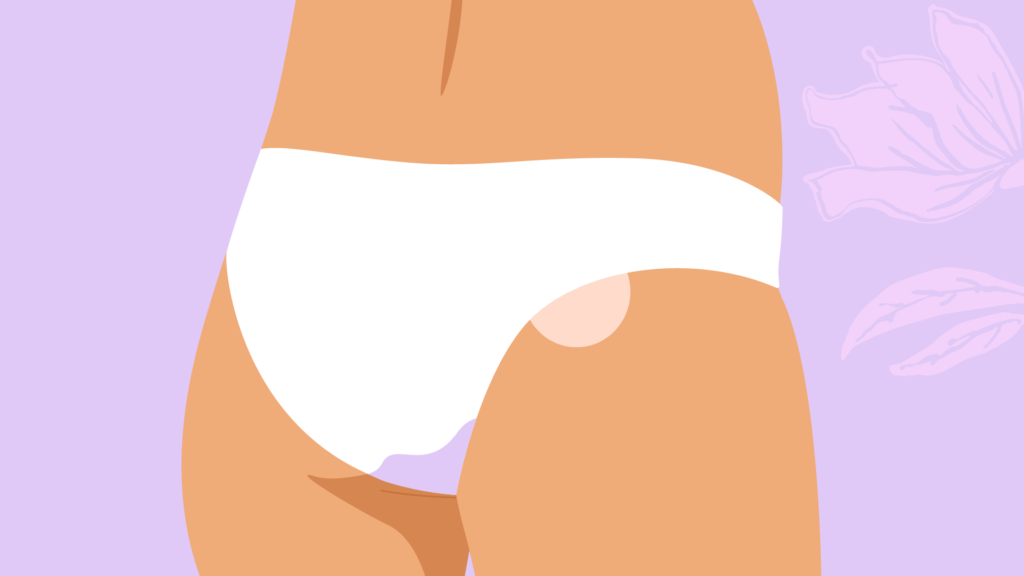
Choose an area of non hairy skin on the belly (lower abdomen), buttocks or upper thigh. Clean and dry this area.
Do not apply moisturiser, oils or sunscreen to the area first, as this can affect hormone absorption.

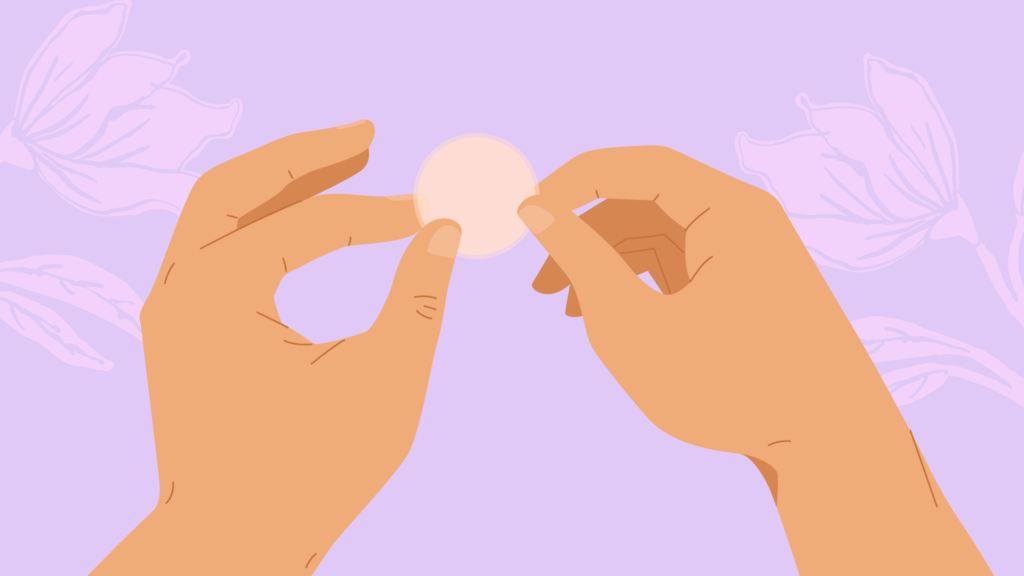
2. Open the patch
Open the patch sachet just before use. Do not cut the patch.
Carefully peel off one side of the backing from the crease line.

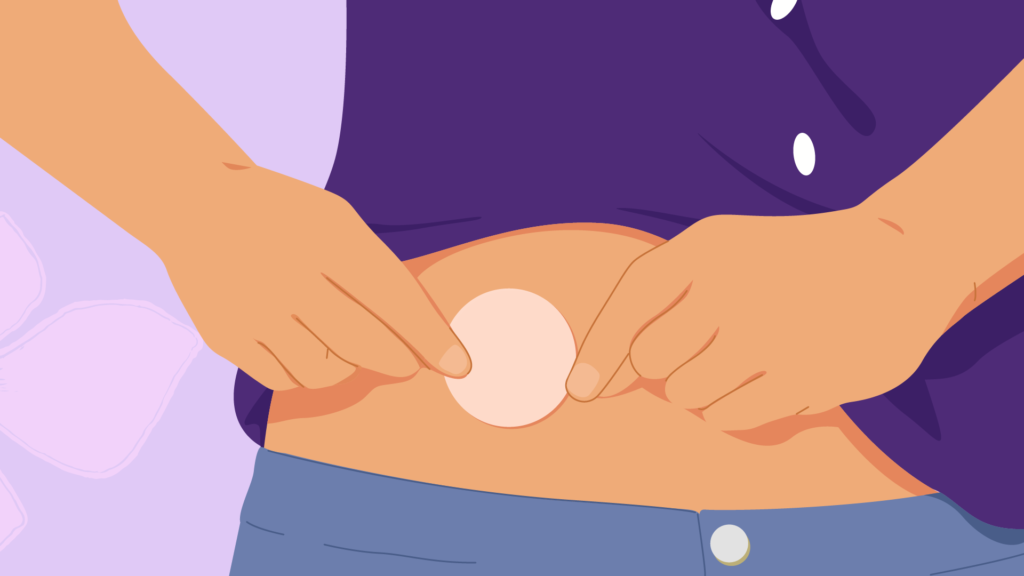
3. Apply the patch
Without touching the sticky side of the patch, apply it to your skin. Then peel off the rest of the backing.
Press down on the applied patch firmly, especially around the edges, for 10 to 30 seconds to ensure good contact with the skin.


4. Change the patch
Wear a patch each day and change it twice per week.
To help keep hormone levels steady, change the patches on the same days of each week. For example, change your patch every Monday and Thursday.

5. Throw away the patch
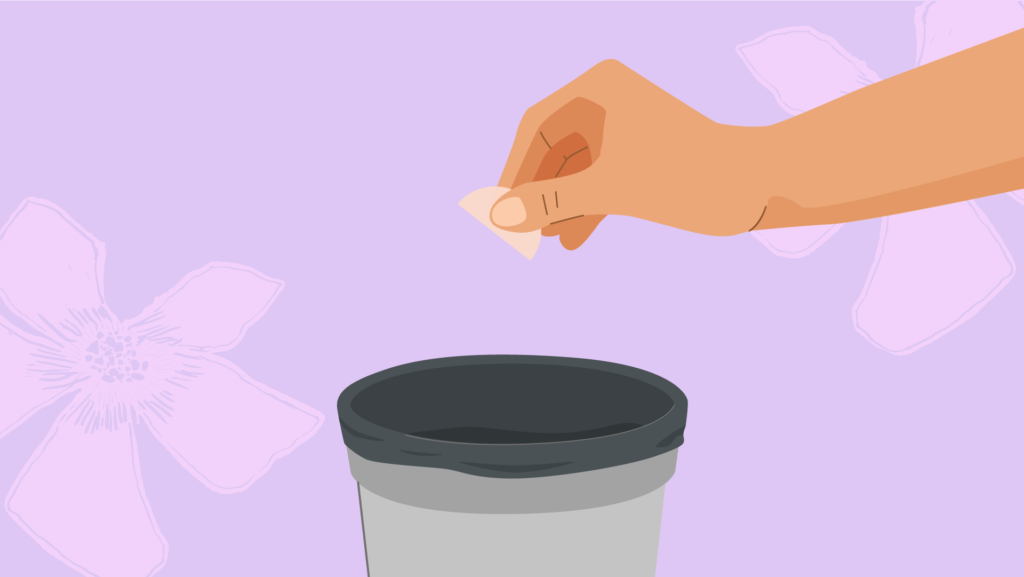
When changing your patch, peel off the old one and fold it in half with the sticky sides together.
Place the old patch in household rubbish where children and pets can’t get it. Do not put it in the toilet, as it may still contain hormones which can damage the environment.

- Do not cut patches, as this can change how the hormone is released and make them less effective.
- If you use combined cyclical MHT, use patches in the correct order.
- Pat dry your patch after bathing or swimming, rather than rubbing directly over the patch.
- If a patch falls off, put a new one on and go back to your usual schedule.
- If you forget to use a new patch, apply it as soon as you remember and then go back to your usual schedule.
- Try using a calendar or app on your phone to help you keep track of your schedule.
- Do not apply patches on or near your breasts.
- Do not apply to irritated or broken skin.
- Avoid placing patches on your waistline or where tight clothes may rub it.
- Avoid placing patches on hairy skin or where skin is folded.
- Apply patches on a different area each time to reduce skin irritation.
- Talk to your doctor or pharmacist if you experience side effects (e.g. a rash or skin irritation) or have questions.
This information is based on commonly used medicines in Australia. Always follow medicine instructions and advice of your doctor, pharmacist or health professional.
Funded by the Australian Government through the Quality Use of Diagnostics, Therapeutics and Pathology Program.

Dr Karina Severin
– Specialist women’s health GP at Jean Hailes ClinicsDr Severin played a key role reviewing this health information to ensure it is accurate, trustworthy, current and useful.
At Jean Hailes, we regularly check our information to make sure it reflects the latest clinical guidelines and key findings from large, reliable studies.
Where possible, we focus on Australian research to make our information more relevant locally.
We actively listen to women and engage with them throughout the content development process, ensuring their voices help shape the information we produce.
We also work with partner organisations, independent specialists and people with lived experience to make sure our content reflects both expert knowledge and the experiences of the community.
You might want to know more about