

















There is no ‘right age’ to start using tampons or menstrual cups
The right age to try tampons or menstrual cups differs from person to person. Many young people start with pads or period undies then progress to tampons, cups or other insertion products later.
You can use tampons or cups from your very first period or choose to wait a while. The best time is when you feel ready and when you feel comfortable exploring your own body. This means you can touch your vulva and in or around your vagina with your fingers.
If you choose not to use tampons or cups, that’s OK too.
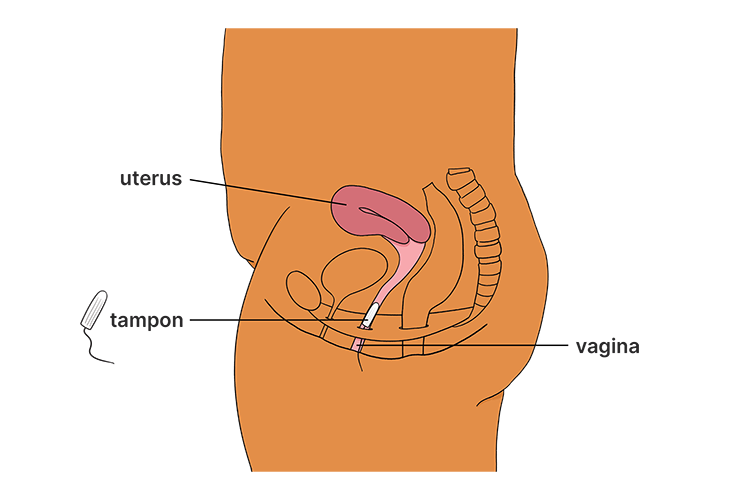
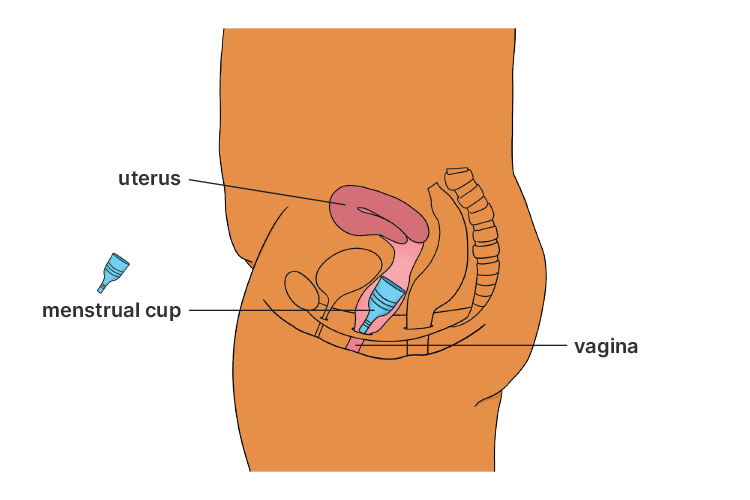
Tampons are absorbent ‘plugs’ that you insert in your vagina to absorb your period blood. They come in different sizes and are made of cotton or a combination of cotton and a synthetic material. Menstrual cups are rubber or silicone cups you insert in your vagina to collect blood. They use suction to stay in place. Learn more about different period products.
What are the benefits of using tampons or cups?
Tampons and cups are good for activities like swimming and sports. They aren’t bulky and, when inserted correctly, you can’t feel them and they shouldn’t hurt.
Menstrual cups are also reusable and can usually hold more menstrual fluid than the average tampon, which some people prefer.
It’s important to set yourself up for success
Before you try tampons or cups, it can help to get to know your vulva and vagina. Your vulva is the outside part of the female genitals that you can see. Your vagina is a tube inside your body that connects your vulva to the lower part of your uterus (cervix).
To explore your vulva and vagina, try feeling them in the shower. You can also look at your vulva and vaginal entrance with a handheld mirror. Exploring like this can help you work out where your period product needs to go.
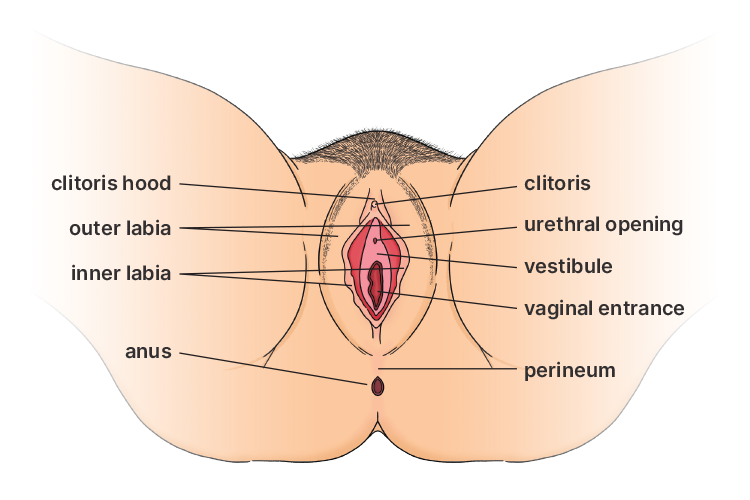
The different parts of the vulva
When you first try inserting a tampon or cup, your vagina may naturally tense up. Try to practise when you have plenty of time and you’re not under pressure to get it right. If things don’t go as planned, stop, take a few deep breaths and try again when you feel ready. You may like to keep other period products – like pads or period underwear – on hand for backup.
It’s a good idea to start with a slim, mini or light tampon or a small cup. Once you get used to inserting and removing the product, you can experiment with different sizes to find the one that’s right for you.
Make sure your hands and underneath your fingernails are clean. If your nails are long, be careful not to scratch yourself.
You can practise inserting and removing a tampon or cup when you do or don’t have your period – it’s up to you. If you have your period, the menstrual fluid can help lubricate your vagina, making it easier to slide the period product in. If you’re worried about making a mess, have some toilet paper or an old towel close by. If you don’t have your period and you’re having trouble inserting the tampon or cup, try applying some water-based lubricant to the product.
The more you get to know your period, the more you’ll learn which products you like and how often to change them.
How to insert and remove tampons and menstrual cups
These steps are a guide to using a tampon without an applicator. Read the information on the product pack before you use a tampon for the first time.
- Wash your hands.
- Get comfortable. Try squatting over the toilet, resting one foot on the bath or a step, or practising in bed. If you are in bed, place some pillows behind your back to prop up your upper body and tilt your pelvis.
- Take the plastic wrapper off the tampon.
- Pull the string so it hangs out from the tampon.
- Holding the string end, use the tip of the tampon or your free hand to gently part the lips of your vulva (inner labia).
- Guide the tampon down towards and into your vagina.
- Using your index or middle finger, push the tampon slightly backwards further into your vagina. It should slide in on an angle towards your tailbone.
- Push it as far as your finger will go, but make sure the string hangs out of your vagina.
- You will not feel the tampon if it is in the right spot.
- Wash your hands.
- Change the tampon at least every 4 to 6 hours. Don’t leave it in for longer than 8 hours.
- To remove the tampon, get into a relaxed position, ideally sitting or squatting over the toilet.
- Grip the string firmly and gently pull it out at the same angle you inserted it – forwards rather than straight down.
- Wrap the used tampon in toilet paper and put it in the bin. Do not flush it down the toilet.
- Put a new tampon into your vagina.
- Wash your hands.
These steps are a guide only. Read the information on the product pack before you use a menstrual cup for the first time.
- Wash your hands.
- Get comfortable – try sitting, squatting or standing. You can also rest one foot on the toilet or bath, or practise in the shower.
- Fold the cup to flatten it – see the product instructions on how to fold.
- Gently part the lips of your vulva (inner labia) with your spare hand or rim of the cup.
- Guide the cup, rim first, towards and into your vagina. Make sure you insert it on an angle towards your tailbone. The stem should sit just inside your vagina. If the stem is too long, remove the cup and trim the stem following the product instructions.
- Check the cup has popped open by feeling around the base with your finger. If the cup hasn’t unfolded, use your fingers to gently twist the base of the cup or remove it and try again. Once the cup is in the right spot, you shouldn’t feel it, and you shouldn’t have any leaks.
- Remove and empty your cup as often as needed. This may be 2 to 4 times per day. Do not wear your menstrual cup for more than 12 hours.
- To empty your cup, wash your hands and get comfortable. Some people find it easier to squat over the toilet or to remove their cup while showering.
- Gently insert your fingers into your vagina and pinch the base – not stem – of the cup to release the suction. Another way is to put one finger into your vagina and gently press the side of the cup.
- Once the suction has released, tilt the cup and carefully pull it out.
- Tip the blood into the toilet and wash your cup. You can then reinsert it or clean your cup in boiling water and store it for your next period.
When using menstrual cups, they should be washed in soapy water every 8 to 12 hours (depending on the brand), or when full. You should also wash your menstrual cup before inserting it and boil it before and after each period.
Common questions, answered
Yes. Wee, poo and your period come out of different parts of your body, so you don’t have to remove your tampon or cup to go to the toilet. But hygiene is important.
If you need to poo with a tampon in, it’s a good idea to hold the string away from your bottom, up towards your vulva to avoid infection. If you need to wee, you may like to hold the string to one side to avoid it getting wet. Always wipe from front to back.
Sometimes, doing a poo can push a tampon or cup out of place. Keep fresh period products on hand in case this happens. If you’re wearing a cup, you can use clean fingers to check that it’s in the right spot.
If you’d prefer to remove your tampon when going to the toilet, discard it and replace it with a clean, fresh period product.
If you’re using a tampon and the string breaks or you can’t get a hold of your menstrual cup to remove it, don’t panic. Cups and tampons can’t get lost in the body. But it’s important not to leave them in for too long.
Wash your hands and get into a squatting position. Put your finger into your vagina and feel around for the tampon or cup. Try to push it out with your finger. If that doesn’t work, try inserting 2 fingers and gripping the product.
If you’re still having trouble, visit your local health centre as soon as possible. A nurse or doctor can help remove the product. Never leave it in for longer than recommended.
Review process
Our review process
This information has been reviewed by clinical experts and is based on the latest evidence.
Our content review process ensures our health information is accurate, trustworthy, current and useful.
We regularly check our information to make sure it reflects the latest clinical guidelines and key findings from large, reliable studies.
Where possible, we focus on Australian research to make our information more relevant locally.
Experts play a key role in reviewing our content. Clinicians at Jean Hailes check information for accuracy and real‑world relevance. These include GPs, gynaecologists, endocrinologists, psychologists and allied health professionals.
We also work with partner organisations, independent specialists and people with lived experience to make sure our content reflects both expert knowledge and the experiences of the community.