









-
Reviewed
Sections on this page
Breakfast
- Half cup low-fat yoghurt, half cup berries and 2 dessertspoons of seeds and nuts.
- 1 slice wholegrain dense low-GI bread with boiled or poached egg; ricotta, cottage or feta cheese with tomato and spinach
- 100 g canned fish, such as sardines or tuna, with salsa of chopped tomatoes, parsley/basil/dill, optional red onion and a teaspoon of olive oil.
- Bircher muesli using yoghurt and grated apple, but not apple juice.
- Smoothie of 1 cup low-fat milk (including almond or soy milk) and half cup unsweetened yoghurt, half cup berries and 2 dessertspoons freshly ground seeds,
- Slice of frittata.
- Scrambled eggs made with 2 eggs, freshly chopped herbs such as parsley or dill, crumbled feta cheese.
- Omelette made with 2 eggs, feta or tasty cheese and chopped vegetables such as mushrooms, grated zucchini, onion and tomatoes.
- Baked ricotta with cinnamon and berries.
- Porridge made with one-third cup rolled oats, milk or milk substitute, half teaspoon cinnamon, 2 dessertspoons chopped nuts and seeds (choose from almond, walnuts, macadamia, sunflower seeds, sesame seeds, linseeds, pepitas).
Lunch
- Slice of frittata.
- Salad (equivalent to 2 cups of raw vegetables in quantity). Choose from lettuce, cucumber, tomato, sprouts and capsicum or steamed vegetables. Dress with olive oil and lemon juice or vinegar). Add canned fish, a palm-sized portion of chicken or lean meat. Or add cottage/ricotta cheese or 2 boiled eggs. For an extra feeling of fullness, add 2 dessertspoons pepitas and sesame seeds.
- Soup – chicken and vegetable or barley and lentil with a dollop of yoghurt, or cauliflower cannellini bean soup served with yoghurt or feta.
- Tuna salad made with tinned tuna, 4-bean mix, fresh salad and chopped herbs.
Dinner
- One-pot chicken and greens.
- Stir-fried vegetables and chicken, lean meat or tofu.
- Lean meat, chicken or fish served with salad or vegetables (the Australian Cancer Council recommends moderate amounts of unprocessed lean red meat, equal to 65–100 g of cooked red meat, 3–4 times per week).
- Sardines with tomato and green beans.
- Rainbow meat loaf.
- Roast dinner – try roasting vegetables that are less starchy, such as eggplant, zucchini, capsicum, red onion, and mushrooms, as well as some sweet potato. Leftover meat and roast vegetables can be eaten for lunch with a bunch of salad greens and balsamic dressing.
Snacks
- Small handful of raw nuts.
- Unsweetened yoghurt.
- An apple or a piece of stone fruit or kiwi fruit.
- A boiled egg.
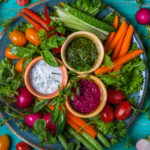
- Tzatziki, baba ghanoush or humous and vegetable sticks (e.g. carrots, cucumber, celery).
Drinks
- Drink plenty of water.
- Herbal tea (e.g. spearmint tea).
- Avoid soft drinks, fruit juice, flavoured milks and sports drinks as these contain added sugars and calories.
- Limit alcohol to no more than 1 to 2 standard drinks per day and ensure regular alcohol-free days every week.
Make it tasty
- Use fresh herbs for flavour (e.g. a good handful of mint can be added to coleslaw, canned beans and fresh vegetables).
- Roast vegetables with garlic, olive oil and rosemary.
- Tasty dressings (e.g. olive oil, balsamic vinegar and a teaspoon of Dijon mustard or try the dressing on the red rice and aduki bean salad recipe for an Asian-inspired flavour.
- Have different pestos on hand (e.g. coriander and Brazil-nut pesto) on salmon fillet. Or make a salad of steamed vegetables, such as broccoli, asparagus, zucchini and potatoes. Combine dill or coriander pesto with yoghurt and fresh lemon juice and mix through. Serve with chicken or fish.
Personal stories about PCOS
-
Story
Our review process
This information has been reviewed by clinical experts and is based on the latest evidence.
Our content review process ensures our health information is accurate, trustworthy, current and useful.
We regularly check our information to make sure it reflects the latest clinical guidelines and key findings from large, reliable studies.
Where possible, we focus on Australian research to make our information more relevant locally.
Experts play a key role in reviewing our content. Clinicians at Jean Hailes check information for accuracy and real‑world relevance. These include GPs, gynaecologists, endocrinologists, psychologists and allied health professionals.
We also work with partner organisations, independent specialists and people with lived experience to make sure our content reflects both expert knowledge and the experiences of the community.

Health information in your language
Related topics
Polycystic ovary syndrome (PCOS)