









Year in review
Our Year in Review highlights the impact, advocacy and progress we made together to improve women’s health in Australia.

A message from our CEO
Jean Hailes for Women’s Health was founded on a simple but powerful belief: when a woman is in good health, her family, her community and the society around her also benefit. For more than 3 decades, we’ve been committed to empowering women with the knowledge, skills and confidence to enjoy their best health and wellbeing at every stage of life.
“We believe that asking questions and listening to women is where change begins. It’s how we uncover critical gaps in health knowledge and care, learn what matters most and decide where to act.”
We hear from women in our Clinics, through our research and in online communities. This year, we’ve once again shown what happens when listening leads to action.
We listened as women in midlife shared their struggles to prioritise their health, navigate conflicting health information and balance caring responsibilities and career pressures. We responded with our most successful Women’s Health Week campaign, focused on distilling information and helping women prioritise their health in simple and easy ways.
We listened to women through our National Women’s Health Survey on critical topics such as early pregnancy loss and migraine. We turned that evidence into action, creating new health resources, professional education and national awareness campaigns that reached millions.
We listened to women from Arabic-speaking, Punjabi-speaking and Vietnamese-speaking communities who told us they wanted health messages delivered We believe that asking questions and listening to women is where change begins.” by women from their communities with lived experience. In turn, we developed in-language menopause videos with real women sharing how they navigated menopause.
I am deeply grateful to our partners, collaborators and community supporters who have helped us turn women’s voices into action. I would also like to thank the Jean Hailes Board for their leadership and unwavering commitment to our purpose. Most importantly, thank you to the thousands of women who generously shared their stories with us. Your voices have shaped everything we do, and they always will.
Dr Sarah White
Chief Executive Officer
In 2025
Jean Hailes actively contributed to many national initiatives to improve women’s health in Australia, including:
- Australian Institute of Health and Welfare stakeholder consultation to develop a Sexual and Reproductive Health Monitoring Framework and Data Strategy
- Tasmanian Government 20-Year Preventive Health Strategy
- Victorian Government Inquiry into Women’s Pain
- Royal Australian and New Zealand College of Obstetrics and Gynaecologists consultation on the development of menopause guidelines
- National Endometriosis Roundtable consultations
- MBS Health assessment review of items for menopause and perimenopause
Our CEO was a member of the following groups:
- National Women’s Health Advisory Council
- National Menopause and Perimenopause Campaign Reference Group
- Victorian Government Women’s Health Advisory Council
- Therapeutic Goods Administration Women’s Health Products Working Group.

Natasha’s story
When proud First Nations woman Natasha Smith received worrying health news, she knew she had to listen to the stories of community and take charge of her health.

Her Health Check
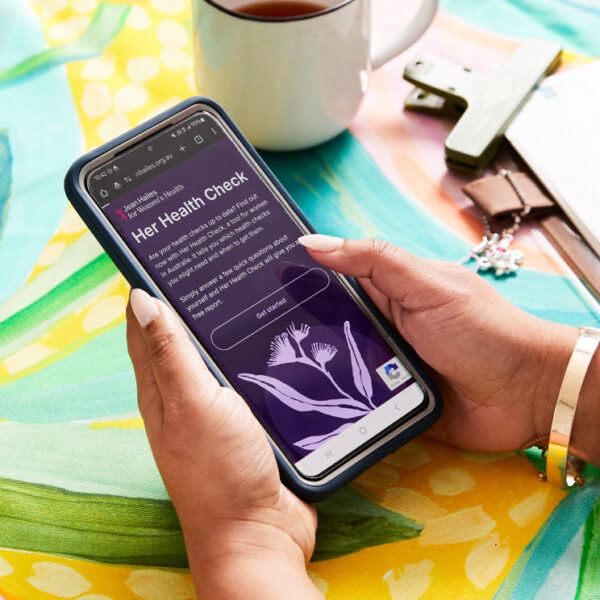
Since September, more than 30,543 women have used Her Health Check, a simple digital health check tool giving women personalised, evidence-based guidance on the screenings and checks they’re due for, based on their age, cultural background and lifestyle.

Health information you can trust
Our resources are shaped by insights from our National Women’s Health Survey, international research and community consultations.
When our 2025 survey revealed that one in 3 women experienced migraine, we worked with Migraine and Headache Australia to create a Migraine Health Information Hub – a dedicated space with practical information for women and consult guides for health professionals. Within the first month, the hub received more than 8,000 views.
Similarly, when women told us about the lack of support and understanding around medically induced menopause, we partnered with Inherited Cancers Australia to develop Australia’s first evidence-based health information on the topic.

Meeting women where they are
Through our expanding social media presence, we deliver timely, practical content to millions of Australians, including sharing the expertise of our clinicians, the stories of women and the insights of our partners.
- 50+ million social media views
- 6.6+ million engagements
- 273% increase in engagements year-on-year
Resources for women with disabilities
To ensure women with disabilities have access to clear, practical and easy-to-understand health information, we continued to expand our Easy Read resources.
In 2024, in partnership with Women with Disabilities Australia, we designed 2 Easy Read fact sheets on the different types of women’s health professionals and what happens during a doctor’s visit. Women with disability guided every step, from text and images to layout and flow.
In 2025, we took things a step further, developing Easy Read videos – the first of their kind in Australia’s women’s health sector – narrated slowly and clearly to support comprehension and confidence.

“It’s really empowering, especially for women with disabilities who don’t have many advocates in their life. I think it’s good for people with autism. It’s like a social story.”
Inclusive illustrations
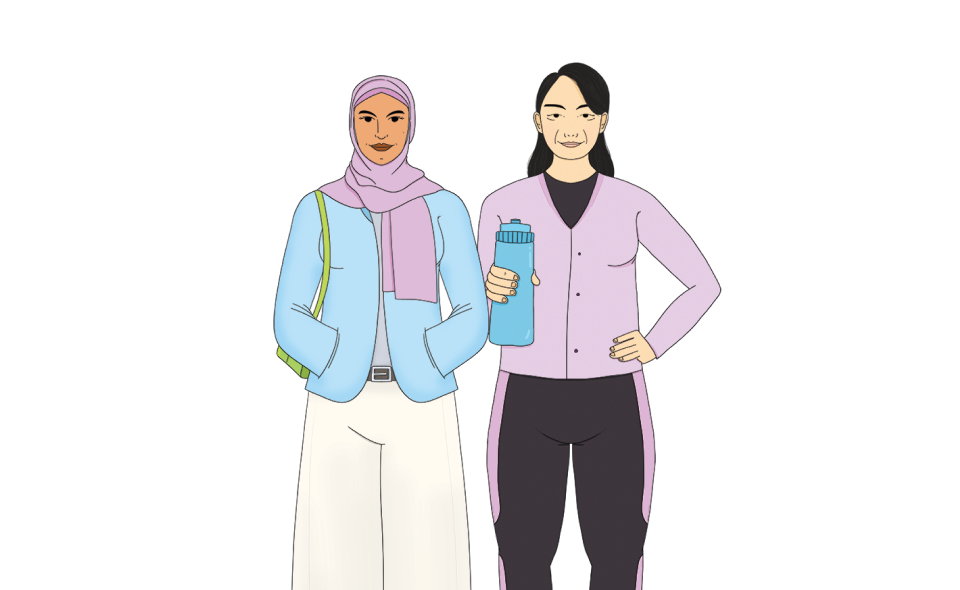
To help reflect the diversity of women in Australia, we created a new series of medical illustrations.
Women from Arabic-speaking, Punjabi-speaking and Vietnamese-speaking speaking communities told us that traditional diagrams often felt too clinical. That’s why the illustrations show whole bodies, not just parts, making anatomy more relatable and less intimidating.
The illustrations were created by Melbourne illustrator Noelle Chan and reviewed for clinical accuracy by subject matter experts from the Jean Hailes Clinics. They were then tested with community members for authenticity and acceptability. These illustrations are now being used in Jean Hailes resources to help make our health information even more inclusive.
Research that drives change
We use a range of robust research methods to learn, directly from women, what issues matter most and where change is needed. These insights inform our health information. They also drive our advocacy work to influence policy and guide national initiatives.
National Women’s Health Survey
Our annual National Women’s Health Survey provides a nationally representative snapshot of women’s health in Australia. It helps us identify knowledge gaps, track emerging concerns and translate those insights into meaningful action.
The 2025 Survey, conducted in partnership with the Early Pregnancy Loss Coalition and Pink Elephants, revealed widespread misconceptions about the causes of early pregnancy loss. Sadly, misinformation can leave women carrying misplaced guilt.

Prevalence of migraine in Australian women
In a national first, we conducted research that showed a staggering one in 3 Australian women suffer from migraine. Migraine is one of the top conditions affecting women’s health globally.

We then consulted more than 1,200 women – in partnership with Migraine and Headache Australia – to develop a Migraine Health Information Hub that fills information gaps and supports women through their migraine journey.
“Jean Hailes must be commended hugely for this really important work. It’s shining a very important spotlight on migraine … anything that we can do in terms of research and improving treatment … will go a long way towards helping.”
Dr Emma Foster, Alfred Hospital Consultant Neurologist (in an interview with 7News)
This project received national press coverage, including our CEO discussing the findings on national television. This coverage sparked a broader conversation about migraine and women’s health, helping a lot of women understand they are not alone.
Through our partnership with Migraine and Headache Australia, women shared the profound impact of migraine on their work, relationships, mental health and daily life.
“Our partnership with Jean Hailes made it possible to reach more than 7 million Australians and highlight migraine as a significant women’s health issue that deserves national focus. It created awareness that would not have been possible on our own.”
Carl Cincinnato, Director of Migraine and Headache Australia
“For me, progress means a health system that can recognise migraine early and offer accessible treatment for everyone. It also means a society where all of us …can meet the words ‘I have migraine’ with understanding, not judgment or dismissal.”
Women’s Health Week
Too often, women tell us they put themselves last while juggling work, caring responsibilities and the invisible mental load. Women’s Health Week 2025 set out to shift that pattern with a simple yet powerful message: Say yes to you.
Women’s Health Week 2025 was the most impactful year in the campaign’s 12-year history. We reached more women than ever through community events, partnerships and digital channels, helping women to prioritise their health in ways that felt personal and achievable.
We launched our new digital health check tool, Her Health Check, providing women with a clear, practical starting point to put themselves first. The response was immediate and overwhelming. In just 5 days, 12,451 women used the tool, including 211 First Nations women.
At the heart of the campaign were women’s voices. Four women generously shared their personal journeys with different health conditions, inspiring thousands of others to take action for their own health and wellbeing.
“I’ve just had endo excised from my diaphragm recently! Took years of advocating for myself and my symptoms before they took it seriously too. Thank you for shining a light and sharing your story.” Reader response to a lived experience story
We also partnered with a diverse group of well-known women, including Elouise Eftos, Chantelle Otten, Allira Potter and Meissa Mason, who used their platforms to speak openly and authentically about their own health journeys. Their honesty, combined with the campaign’s use of humour and relatability, helped us engage women across generations.
Supported by all sides of government
Women’s Health Week 2025 began with the launch of Her Health Check at Australian Parliament House, led by Assistant Minister for Health and Aged Care, Women and Indigenous Health The Hon Rebecca White MP, and strongly supported by Senators and Members of Parliament in Canberra.
Jean Hailes also joined Women’s Health Week events at the Parliament of South Australia and the Parliament of Victoria. We wish to thank Minister for Health and Wellbeing Chris Picton and Minister for Health Mary-Anne Thomas for championing women’s health.
Supported by our partners and the community
Each day of the campaign focused on a key health topic, from heart health to mental wellbeing. With the help of our trusted partners, including the Heart Foundation and Beyond Blue, we connected women to evidence-based information and local supports.
Community participation reached new heights, with 3,132 events and activities held nationwide. We welcomed 8 new community supporters, including the National Aboriginal Community Controlled Health Organisation (NACCHO), one of the largest organisations to join us in reaching and supporting First Nations women. We also engaged 9 contributor organisations to support content development, media commentary, social media storytelling and expert review.
94 million
3,132
12,451
World Menopause Month
For more than 30 years, we’ve been listening to stories about perimenopause and menopause, and providing evidence-based guidance to support women through this significant life stage.
What we’ve learnt is that midlife is more than menopause. It’s career shifts, caring responsibilities, changing relationships and evolving health needs. That’s why our World Menopause Month campaign focused on “midlife managed”, recognising that menopause is just one part of a wider midlife story.
Throughout October, we profiled a diverse group of women, who spoke openly about their midlife journeys. Alongside each story, we linked to evidence-based information tailored to that woman’s journey, helping audiences find support that felt personally relevant.
We also shared expert advice from our clinicians and hosted webinars on topics such as sleep during midlife, in partnership with the Sleep Health Foundation, and eating disorders during menopause, with the Butterfly Foundation.
“Women’s health matters, and the more we talk about it, the more we can change things.” Glenda, lived experience
Leading the national conversation
As menopause gains more visibility in the mainstream, we’ve also seen a surge in misinformation, commercial exploitation and ‘menowashing’. As a leader in menopause education for more than 3 decades, Jean Hailes presented on menopause, the midlife collision and misinformation to the Parliamentary Friends of Women’s Health group in Canberra, alongside colleagues from Deakin University and not- for-profit, Violet.
Beyond Blue webinar
Our CEO Dr Sarah White was a panellist on The Menopause ‘Mind field’, a national Beyond Blue webinar exploring the intersection between mental health and menopause. The event drew more than 9,000 registrations and more than 6,300 views on YouTube, making this Beyond Blue’s most attended webinar.
“This webinar was the best one I have seen for a very long time (and I watch a lot) – the best! All the guests were intelligent, articulate, pleasant to listen to, and shared so much relevant and new information.” Beyond Blue webinar participant
Information on menopause in different languages
We know that not everyone accesses information in the same way, and that language and cultural differences can be powerful barriers.
We listened to women from Arabic-speaking, Punjabi-speaking and Vietnamese-speaking communities who told us they wanted health messages delivered by women from their communities with lived experience. In response, we developed menopause videos featuring 3 women sharing their unique stories in their own language.
Each woman shared a simple message with her community, asking them to speak up, seek help when needed and prioritise their health. These videos have been viewed by more than 100,000 people in Australia since their launch in October.
“I am on a quest to understand my special, often difficult and frustrating new friend I call menopause – and how to live with it.” Dagmara, lived experience
3.6 million
27,000
1,171
661
Partnering to advance women’s health
Jean Hailes is a highly sought-after partner for translating research into action. We work closely with groups in government and academia, and the community, health and not-for-profit sectors. This year, we welcomed 8 new partners and 8 new collaborators, strengthening women’s health at every level, from grassroots education to national policy.
We continue to play a pivotal role in bringing a gendered lens to health. We focus our efforts within and beyond the bikini line to ensure sex and gender are always considered when it comes to health. Our goal is to help our partners and collaborators share their findings widely – with government, clinicians, media and the public – to ensure we collectively drive change where it’s needed most.
We partnered with the Butterfly Foundation to raise awareness about eating disorders in midlife. More than 1,000 people registered for our webinar, which featured expert advice and lived experience stories.
For Women’s Health Week, we partnered with the Heart Foundation to shine a light on heart disease – a condition that affects women differently to men. Women remain underrepresented in cardiovascular research, and are thus underdiagnosed and undertreated. Too often, women face longer delays in receiving life-saving treatment or aren’t taken seriously when presenting with symptoms. Together, we are working to address those gaps and connect women with vital health information and support.
“For decades now, Jean Hailes has been a national leader in ensuring that women’s health is better understood and treated in Australia, and there is no more important issue for us to deal with than heart disease.” David Lloyd, CEO of the Heart Foundation
We partnered with Inherited Cancers Australia to understand the stories and information needs of women who have experienced medically induced menopause.
Our research found that too many women face it without clear information or advice.
In response, we developed Australia’s first evidence-based health information on medically induced menopause, ensuring women and health professionals have access to accurate, practical and compassionate information.
We also shared the stories of Jess Westcott and Chloe Nall, who were both diagnosed with breast cancer at just 27, only 6 weeks apart. They underwent identical treatment – chemotherapy, mastectomy and endocrine therapy – which led them both into medically induced menopause.
We’re now working with other organisations to expand access to these resources, ensuring that no matter how or why a woman enters medically induced menopause, she has access to the right information and support.
“I went through medically induced menopause 4 years ago at 44 after risk reduction hysterectomy (Lynch syndrome). While I was advised I would go through menopause, information was vague and I never imagined just how challenging it would be. Thank you for bringing awareness to this.” Social media comment
In 2025, Jean Hailes was invited to become a member of the Quality Use of Medicines (QUM) Alliance, a network of 16 peak consumer, health professional and research organisations. The Alliance develops resources for health professionals and consumers to improve safety and health outcomes around the use of medicines. It successfully obtained a competitive grant from the Australian Government’s Quality Use of Diagnostics, Therapeutics and Pathology (QUDTP) Program to develop resources on 4 key health issues, one of which is menopause.
We are providing knowledge and expertise on menopause to complement the contributions of other members of the QUM Alliance, including Carers Australia, the Health Care Consumers’ Association, Medcast, the Pharmaceutical Society of Australia, QUM Connect, and the Royal Australian College of General Practitioners. Our collective goal is to improve how women use and are prescribed medicines to safely manage menopausal symptoms.
Through a partnership with Priceline Pharmacy, we developed a training program for pharmacists and pharmacy assistants. Accredited by the Australasian College of Pharmacy (ACP), the program equips pharmacy teams with evidence-based knowledge to confidently support women managing menopausal symptoms.
Jean Hailes has been working to improve menopause information and care for more than 30 years. We’re always exploring new ways of sharing our clinical expertise so that more women can access accurate, compassionate advice when they need it.
Our clinical expertise is also being shared through Priceline’s podcast series and newsletter, reaching more than 8 million women across Australia through Priceline Sister’s Club.
Thanks to the support of the Alan and Kate Gibson Foundation, we surveyed more than 1,000 women aged 65 years and older to find out what mattered most to them. Using those insights, we developed evidence-based information on Healthy Ageing, covering topics such as bone and joint health, confidence in older age, social connection and emotional wellbeing, memory and cognition, and nutrition and healthy eating.
In 2025, we expanded the information hub with new podcasts and videos featuring conversations with health experts. The results show real impact:
- More than 90% of respondents said the resources improved their knowledge and confidence about managing their health.
- More than 66% took positive action or changed their behaviour after accessing the information.
“This partnership is about shifting the narrative on ageing. Our ultimate goal is to challenge societal expectations that too often ignore or underestimate older women when in reality, there is so much wisdom and experience to learn from. Together with Jean Hailes, we’re supporting older women to feel informed, confident, and valued at every stage of life. By empowering older women with knowledge and confidence we’re helping them to rewrite the story.” Kate Gibson, Alan and Kate Gibson Foundation.
Jean Hailes is deeply honoured to have been selected as a charity partner of the Sisterhood Foundation. The Sisterhood Foundation is the official charity partner of all Wesfarmers Health businesses, and has a mission to build capability in frontline charities that are committed to creating positive health outcomes in the lives of women and girls.
This multi-year partnership gives us the capacity to produce an AI model that uses carefully curated women’s health information – including insights from decades of feedback from Australian women – to provide even more personalised information to our website visitors. We are currently exploring how we can use AI to provide even more health information to women who speak languages other than English.


Meeting women in their communities
We collaborate with trusted groups and organisations to better understand and meet the needs of women from different priority populations. This year, we were proud to have 25 community supporters, including the National Aboriginal Community Controlled Health Organisation (NACCHO), Multicultural Centre for Women’s Health, COTA for Older Australians, Live Up, and the Centre for Culture, Ethnicity & Health.
Community Hubs
Listening to women often means meeting them where they are, in their communities and in their spaces.
We partnered with Community Hubs Australia to better understand how women from Arabic-speaking, Punjabi-speaking and Vietnamese speaking backgrounds access and trust health information.
“One of the most beautiful outcomes is the bond that’s grown between the women in the group and their hub leader. The conversations didn’t end on the day – you’ve sparked something ongoing. The women are continuing to support each other, opening up in ways they hadn’t before.”
Banksia Road Public School, NSW
Across 9 hubs in New South Wales, Victoria and Queensland, women shared with us their honest and often deeply personal stories about how culture, family and language shape their experiences of health.
Many told us that periods are still spoken about in whispers, if at all, and that embarrassment or lack of information can stop them from asking questions. Others said they know health checks are important but struggle to prioritise them, especially when time, cost or fear gets in the way.
“We need to tell our children about periods. Every girl needs to know this information, not to scare them.” Punjabi-speaking woman
Sharing our clinical expertise
We hear directly from women about the health issues that matter most through the Jean Hailes Clinics.
Our Clinics bring together nearly 40 clinicians, including nurses, GPs, sexual health physicians, endocrinologists, gynaecologists, a naturopath, a physiotherapist and psychologists – all specialising in women’s health. This year alone, these dedicated clinicians provided care to more than 8,000 patients.
“I finally feel heard. So thorough and caring. I am so happy I have finally found a doctor who has helped me so much. It’s been life changing for me.” Juanita, patient
What we learn in our Clinics also shapes our health professional information and education. Every Jean Hailes course, webinar and educational resource is informed by the real world experiences of women and reviewed by our clinicians, ensuring the information is evidence-based, practical and relevant.
This unique, multidisciplinary model allows us to translate insights from the consulting room into information, tools and education for health professionals across Australia.
From patient care to professional education, our clinical expertise ensures that what we hear locally is shared nationally.
Building skills in women’s health
In response to the Senate Inquiry ‘Ending the Postcode Lottery’, which highlighted the need for training and support to help nurses and midwives work to their full scope of practice, we developed a comprehensive range of online courses tailored specifically to nurses and midwives.
- 7 new courses for nurses and midwives
- 16,447 nurse and midwife course participants
“It is an extremely informative course, well-presented and easy to understand. Excellent resources provided throughout.” Participant, ‘Understanding vulval health for nurses and midwives’ course
The courses cover key women’s health topics such as periods and the menstrual cycle, health checks, vulval health, PCOS, pelvic floor health, contraception and endometriosis. They are endorsed by the Australian Primary Health Care Nurses Association and Australian College of Midwives.
We also developed a new resource on menopause to support health professionals working with First Nations women, helping ensure care is not only clinically accurate but also culturally safe.

Menopause education program
In 2024, the Australian Government awarded Jean Hailes $1.2 million to make our online menopause education courses available free to all health care professionals in Australia.
In just one year, 4,415 GPs, 4,520 nurses and midwives and 1,163 other health professionals enrolled in these courses.
In partnership with the Australasian Menopause Society (AMS), we updated our existing GP course (accredited by the Royal Australian College of General Practitioners and the Australian College of Rural and Remote Medicine). We also developed a course for nurses and midwives (endorsed by the Australian Primary Health Care Nurses Association and the Australian College of Midwives).
10,098 Menopause Education Program course participants (at 1 January 2026)
“I feel more confident in conducting a menopause consultation. I will use the information gained during this activity when I am starting to conduct the new Medicare-funded menopause health assessment.” GP, Rural NSW

Heavy menstrual bleeding algorithm
We released a new heavy menstrual bleeding algorithm, developed in collaboration with subject matter experts and aligned with the Australian Commission on Safety and Quality in Health Care’s Heavy Menstrual Bleeding Clinical Care Standard.
Now promoted through the Commission’s channels, the algorithm provides an accessible, evidence-based guide to improve diagnoses and treatment for women experiencing heavy periods.
Thank you to our partners and supporters for working with us in 2025
- ACON
- Alan & Kate Gibson Foundation
- Ask PCOS
- Assoc Prof Michelle Peate, University of Melbourne
- Assoc Prof Subhadra Evans and Prof Antonina Mikocka-Walus, Deakin University
- Australasian Menopause Society
- Australian Coalition for Endometriosis
- Australian College of Midwives
- Australian College of Rural and Remote Medicine
- Australian Indigenous Health Info Net
- Australian Primary Health Care Nurses
- Association Bankstown Women’s Health Service
- Better Health Channel
- Beyond Blue
- Bowel Cancer Australia
- BreastScreen South Australia
- BreastScreen Victoria
- BreastScreen WA
- Butterfly Foundation
- Cancer Council SA
- Cancer Council Victoria
- Centre for Culture, Ethnicity & Health
- Community Hubs
- Coolamon Creative
- COTA for Older Australians
- Cultura Collaborative
- Dementia Australia
- Desert Blue Connect
- Early Pregnancy Loss Coalition
- En-DIT group (University of Melbourne)
- Endometriosis Australia
- Fairfield Women’s Health Service
- Federation of Ethnic Communities Councils of Australia
- Fernwood Fitness
- Garnduwa General Practice Registrars Australia
- Grace Papers
- HealthDirect
- Healthy Bones Australia
- Healthy Male
- Indian Care
- Inherited Cancers Australia
- IPC Health
- Ishar Multicultural Women’s Health
- Kidney Health Australia
- Kimberley Aboriginal Medical Services W
- LGBTIQ+ Health Australia
- Libra
- Live Up
- Liverpool Women’s Health Service
- Luma
- Lung Foundation
- Migraine and Headache Australia
- Miwatj Health Aboriginal Corporation (NT)
- Movember
- Multicultural Centre for Women’s Health
- Musculoskeletal Health Australia
- National Aboriginal Community Controlled Health Organisation
- National Centre for Farmers Health
- National Heart Foundation
- Nepean Blue Mountains LHD (NSW)
- Ovarian Cancer Australia
- Ovarian Cancer Research Foundation
- Pink Elephants
- Sisterhood Foundation
- Priceline Pharmacy
- Prof Danielle Mazza, SPHERE Centre of Research Excellence at Monash University
- Prof Gita Mishra, University of Queensland
- Prof Martha Hickey, The Royal Women’s Hospital
- Prof Samantha Thomas, Institute for Health Transformation, Deakin University
- Prof Susan Davis, Women’s Health Research Program, Monash University
- Quality Use of Medicines Alliance consortium
- QENDO Reckitt (Nurofen)
- Royal Australian and New Zealand College of Obstetricians and Gynaecologists
- Royal Australian College of General Practitioners
- Royal Flying Doctor Service
- Sexual Health Victoria
- Sleep Health Foundation
- Stars Foundation
- The Australian Contraception and Abortion Primary Care Practitioner Support Network (AusCAPPS)
- The George Institute for Global Health
- The Water Well Project
- Thorne Harbour Health
- Thriving Communities Partnership
- Verve Photography
- Westfield
- Women with Disabilities Australia
- Women’s Adventure Film Tour
- Zurich Financial Service