For the most up to date information on this topic, please visit jeanhailes.org.au
Overview
Medically induced menopause happens when menopause is triggered by surgery or medical treatment, not by the natural ageing process.
If you have cancer or a health condition such as endometriosis or ovarian cysts, you may need medical treatment or surgery that brings on menopause. Medically induced menopause can be temporary or permanent.
Find helpful advice and conversation starters to bring to your medical appointment. You can use these suggestions to talk to a doctor at a community health centre, private clinic or hospital.
This page is part of our women’s health series, offering simple, practical tips to help you make the most of your medical appointments. This includes advice for:
Medically induced menopause happens when menopause is triggered by surgery or medical treatment, not by the natural ageing process.
If you have cancer or a health condition such as endometriosis or ovarian cysts, you may need medical treatment or surgery that brings on menopause. Medically induced menopause can be temporary or permanent.
Find helpful advice and conversation starters to bring to your medical appointment. You can use these suggestions to talk to a doctor at a community health centre, private clinic or hospital.
This page is part of our women’s health series, offering simple, practical tips to help you make the most of your medical appointments. This includes advice for:
There are lots of ways people describe medically induced menopause. The terms ‘medically induced menopause’ and ‘medical menopause’ are the most common, and they mean the same thing. You might also hear:
Treatment-induced menopause
Chemically induced or chemical menopause
Surgical menopause
Iatrogenic menopause
Early or premature menopause due to medical treatment
Induced or forced menopause
Understanding medically induced menopause
Some women regain their periods and fertility after chemotherapy, radiation or hormone treatments for conditions like cancer or endometriosis. Others may enter permanent menopause. It’s often hard to know how long symptoms will last before treatment, and there’s no test to predict if medically induced menopause will be temporary or permanent.
Every person is different, so it’s important to speak with your health care team. Your doctors can assess your individual circumstances and help you understand what’s most likely in your case.
Injections to create a temporary menopause are key treatments for a wide range of conditions.
The injections are called gonadotrophin-releasing hormone (GnRH) analogue injections. They stop your ovaries making the hormones oestrogen and progesterone, and stop your menstrual cycle.
You may be prescribed GnRH injections to help manage symptoms of:
endometriosis
adenomyosis
uterine fibroids
heavy periods
pelvic pain
premenstrual dysphoric disorder (PMDD).
If you’ve not been through menopause, ovulation and periods usually come back within 6 to 10 weeks after stopping treatment with GnRH.
The longer the treatment time, the longer it might take for your periods to return.
Oestrogen levels start to rise again after the last injection wears off. That means your menopausal symptoms might also improve.
The older you get while you take the treatment, the closer you get to your natural menopause. You may find you’re in perimenopause when you stop treatment. If you’ve been through natural menopause while taking the treatment, your periods will not come back.
Chemotherapy and radiation therapy induced menopause
Your individual circumstances will affect whether your chemotherapy or radiation treatment causes a temporary or permanent earlier menopause, and how soon after treatment it starts.
The following factors can make it more likely that your periods and fertility return after chemotherapy.
Being aged under 35
The younger you are, the more likely you’re to have more eggs in your ovaries. One study suggested over 70% of women under 35 got their periods back – the study included women between the ages of 20 to 35 whose periods stopped during treatment.
Some sources suggest women under 45 may get their periods back 2 years after treatment.
The type and dose of chemotherapy drugs
Some chemotherapy drugs are less damaging to the ovaries (gonadotoxic) than others. Having the least damaging medicine types, lower doses and a lower number of medicines as part of your treatment can also increase the chance of chemotherapy menopause being temporary.
Your health condition
Sometimes, lower doses of chemotherapy are used for conditions including lupus and rheumatoid arthritis.
Here are some key factors to consider and talk through with your health care team.
Your age when you have treatment
The older you are, the closer you’re likely to be to your natural menopause. This means you have fewer eggs in your ovaries already. The chance of medically induced menopause being permanent increases with age.
Having chemotherapy and radiation therapy
If you have chemotherapy as well as radiation therapy to the belly (abdomen), pelvis or whole body, it is more likely to cause permanent menopause.
The type and dose of chemotherapy drugs
Taking medicines that are more damaging to the ovaries (gonadotoxic) than others, taking higher doses, or taking more than one medicine can also increase the chance of chemotherapy menopause being permanent.
These chemotherapy medicines are more likely to cause permanent menopause:
Busulfan
Carmustine
Chlorambucil
Cyclophosphamide
Doxorubicin
Lomustine
Mechlorethamine
Melphalan
Procarbazine
The dose and location of your radiation treatment
Higher doses and radiation directly to your ovaries or pituitary gland (a gland in your brain) are more likely to create permanent menopause.
After radiation treatment, there are things that will increase the chance of your menopause being temporary. These include the following:
Your age
The younger you are, the more egg cells you’re likely to have in your ovaries. So, even if some get damaged, there may be others that don’t get damaged.
The dose and location of radiation treatment
How much radiation your ovaries absorb is important. Lower doses and radiation that is directed further away from your ovaries can make it more likely for medically induced menopause to be temporary.
How much radiation your pituitary gland absorbs is also important. This gland is located in your brain and tells your ovaries to make oestrogen.
Location of your ovaries (ovarian transportation)
Whether you can ‘move’ your ovaries before radiation treatment. Sometimes it is possible to have minor surgery that moves the ovaries further away from the area where you need radiation treatment. The operation is called ovarian transposition. This operation may help:
reduce damage to your ovaries
prevent medically induced menopause
reduce the chance of induced menopause being permanent.
Surgery induced menopause
Different kinds of surgery can create an earlier menopause or cause menopause to happen straight away. Here’s what the latest research tells us.
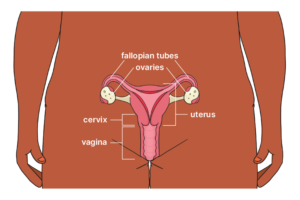
Surgical menopause means the removal of both your ovaries. If both ovaries are removed, you’ll experience permanent menopause immediately.
A hysterectomy is an operation to remove your uterus and does not necessarily include the removal of the ovaries. Sometimes, ovary removal is recommended at the same time as a hysterectomy.
If you have a hysterectomy and keep both ovaries, you’re likely to reach menopause at the expected age. However, in some women, a hysterectomy, even without ovary removal, may still lead to earlier menopause.
If you also have one ovary removed with your hysterectomy, there is a higher chance of a natural menopause. There is also a small risk that you may have an immediate menopause after your operation.
You may also reach menopause earlier than you would have without the operation. This may be because blood flow to your ovaries can be affected, or scarring can happen due to the operation.
Usually, removing only the fallopian tubes (an operation called a bilateral salpingectomy) would not cause menopause. But there is some evidence that removing the fallopian tubes during a hysterectomy may increase your chance of menopausal symptoms one year after surgery.
More research is needed in this area.
What to ask your doctor about medically induced menopause
When it comes to medicines and surgery, it’s important to make the right decision for you.
Asking the right questions and getting the information you need from your health care team is a key part of that.
You don’t need to ask all the questions below – use them as a guide and choose what matters most to you.
Questions about surgery and recovery
If you’re considering surgery to treat or reduce your risk of cancer, or to treat a condition such as endometriosis or ovarian cysts, these questions can be helpful to ask your health care team.
What exactly is the surgery you’re recommending for me? Will you take out my uterus (womb), ovaries, fallopian tubes or cervix? If I’m having a hysterectomy, what kind of hysterectomy is it?
What are the pros and cons of each of my options?
Why is this surgery recommended for me? Is it because of my health condition or because I have a high risk of cancer due to an inherited gene mutation?
What are the benefits of the surgery for me?
What are the potential risks? How likely are they?
How would you expect the surgery to affect my overall health and quality of life?
What is the most recent evidence for this treatment?
If you’re recommending surgery for cancer risk reduction, what will my residual cancer risk be after this surgery?
What are the alternatives to surgery? What happens if I don’t do anything?
What will the surgery cost? What will the treatment and any menopause care cost afterwards?
Are there any out-of-pocket expenses I should be aware of? For example, anaesthetist fees, hospital excess.
What are the costs of any follow-up appointments and treatments?
Will I need to pay for any medications after the surgery?
Will I need to pay for any medications to offset the side effects of the treatment?
What are the costs of MHT?
Will I need to consider and budget for medical tests and checks to monitor my health, such as bone density scans (DEXA scans)?
Provided by the Australian Government, helps you find and understand costs for general practitioners (GPs) and medical specialist services across Australia.
What are the risks and benefits of removing only the ovaries and fallopian tubes for cancer risk reduction? Could I remove only one ovary and my fallopian tubes?
Can I remove my fallopian tubes and delay removing my ovaries?
What specific surgical procedure are you recommending, and why? Will it be laparoscopic, robotic or open surgery, or something else? Am I a good candidate for the less-invasive laparoscopic surgery, as opposed to a full abdominal incision?
What are the risks and benefits of this surgical approach?
Will I have any scars?
How long will the surgery take?
What type of anaesthetic will be used?
What are the pre-operative steps I need to follow? For example, do I need to fast or take medications? Will I need to provide a blood sample before the procedure? Will I need to stop taking any current medications?
Will you check the tissue you remove for cancer cells or other abnormalities?
What are the risks of complications during and after surgery? Is there anything we can do to reduce the risk?
How many of these procedures have you performed, particularly for women in my specific situation?
What is your success rate with this type of surgery?
Will this surgery cause me to go into immediate menopause or have an earlier menopause? (Make sure you ask if your treatment will also include chemotherapy, radiation therapy or hormone therapy.)
How likely is it to be a temporary or permanent menopause?
If I am currently taking menopausal hormone therapy (MHT), will I need to stop taking it before treatment, and will I be able to return to using it after?
Is there anything that could help reduce my risk of earlier menopause?
Is there anything we can do to preserve my fertility? For example, freezing eggs or embryos.
What are my options if I want to have children or more children in the future?
How soon do I need the surgery? Is there anything I can do in that time to improve my chances of a better recovery? For example, with diet, exercise or counselling.
Should I see a menopause specialist to talk through my options prior to surgery, and can you refer me to a menopause specialist?
What is the expected recovery time?
Is it likely I’ll experience pain after surgery? And if so, what pain management strategies will be used?
Are there any precautions I should take as I recover? Will you give me written instructions to follow about things like wound care?
What are the signs of post-operative complications I should watch out for?
When can I expect to be released from the hospital?
When can I get back to regular activities, including work, sex and exercise? Will I have any restrictions on lifting, driving or other activities?
If I can take menopausal hormone therapy (MHT), should I have it planned and ready for when I leave the hospital after my surgery?
Should I see a menopause specialist to talk through my options prior to surgery?
Will I need follow-up appointments, and how often? How often would you want to see me after surgery?
How would we work together to manage my follow-up care?
Would you manage all aspects of that care, or would you prefer that I see another doctor as well? How would the 2 of you communicate?
What should I do if I have problems or questions in between appointments? Who will be able to answer my questions?
If I feel that I need to consult with other health care professionals, will you be able to provide me with referrals?
If your medically induced menopause is caused by medical treatment such as chemotherapy, radiation therapy or anti-oestrogen medicine, this is also known as treatment-induced menopause. These questions can be helpful to ask your health care team.
What treatment or treatments are you recommending for me, and why?
What are the benefits? What are the potential risks, and how likely are they?
How would you expect the treatment to affect my overall health and quality of life?
Will the treatment increase the risk of my condition coming back?
Are there any alternatives?
What happens if I don’t do anything?
How soon does the treatment need to start – and is there anything I could do before or during to help me cope well?
If I am currently taking menopausal hormone therapy (MHT), will I need to stop taking it before treatment, and will I be able to return to using it after?
What are the chances my health condition might come back if I use MHT? For example, for my kind of cancer, or my endometriosis or fibroids?
Are there any studies or trials I could be part of that contribute to research in this area?
How likely is temporary menopause compared to permanent menopause in my situation?
What chemotherapy medicine would I be having? How toxic are they to my ovaries?
What radiation therapy would I need? How close to my ovaries would it be targeted?
What hormone medicines would I need to treat my condition?
How would it affect my ovaries?
Is it possible to make the menopause more likely to be temporary in my situation? If so, what steps are involved?
Is there a way to have a less-toxic chemotherapy approach?
Is there a hormone medicine protocol to treat my condition that is less likely to bring on permanent menopause?
What are the chances of my ovaries working again after treatment?
What fertility preservation options are available to me before treatment? For example, egg freezing, embryo freezing or ovarian tissue freezing.
What is the success rate of these fertility preservation methods for someone of my age and health?
What are the risks and benefits of each fertility preservation option?
How long would I need to wait after treatment before trying to get pregnant, if it were possible?
Are there other treatments I might need that may cause menopause as a side effect?
What are the most common short-term side effects of this treatment? How long do they usually last?
What are the most common menopausal symptoms that happen alongside the side effects?
How will you help me manage these so I can get through treatment?
How will they affect my ability to get on with daily life?
Will I need follow-up appointments, and how often? How often would you want to see me during and after treatment?
How would we work together to manage my follow-up care?
Would you manage all aspects of that care, or would you prefer that I see another doctor as well, for example, about any menopausal symptoms? How would the 2 of you communicate?
What should I do if I have problems or questions in between visits? Who will be able to answer my questions?
If I feel the need to consult with other health professionals, will you be able to provide me with referrals? Could you, for example, refer me to a menopause specialist?
How experienced are you in managing treatment-induced menopause?
What is your experience with fertility preservation?
How often do you treat patients who might experience this side effect?
Questions about managing menopausal symptoms
These questions can help you prepare and understand the symptoms of medically induced menopause.
How is a medically induced menopause different to a natural menopause? Is it more severe or sudden?
What are my options for managing menopausal symptoms?
What are the risks and benefits of menopausal hormone therapy (MHT), and what kind could be suitable for me? For example, are patches or gels better than pills? Is vaginal oestrogen OK for me?
Would I need to use MHT for longer than someone who hasn’t had treatment, and if so, what are the risks for me?
What are my options if MHT isn’t suitable for me?
What are the chances my health condition will come back if I use MHT? For example, for my kind of cancer, or for my endometriosis or fibroids?
What non-hormonal treatments are there?
What effective lifestyle approaches are there?
What will the impact be on my sexual and vaginal health? Are there any treatments that can reduce the risk of problems for me? Is there anything I can do?
Are there other health professionals who can help me manage my menopausal symptoms? For example, a dietitian or exercise physiologist?
How can I best support my mental health and relationships during this time?
How will I know if my symptoms are related to menopause or the treatment?
What are the potential long-term risks of the treatment or surgery on my hormonal health and my health overall? I’m concerned about the impacts of menopause on my bone, heart and brain health.
Is there anything I can do to reduce those risks before, during and after the treatment or surgery?
Can you help me deal with my main worries about the treatment or surgery? (You will need to think about what these are and be able to share them with your medical team.)
How can I manage the emotional and mental health impacts of this treatment or surgery, including potential feelings of loss around fertility, fears about my condition coming back, or changes in body image?
Are there support groups or counselling services available to help me cope with the emotional aspects of the treatment or surgery?
Review process
Our review process
This information has been reviewed by clinical experts and is based on the latest evidence.
Our content review process ensures our health information is accurate, trustworthy, current and useful.
We regularly check our information to make sure it reflects the latest clinical guidelines and key findings from large, reliable studies.
Where possible, we focus on Australian research to make our information more relevant locally.
Experts play a key role in reviewing our content. Clinicians at Jean Hailes check information for accuracy and real‑world relevance. These include GPs, gynaecologists, endocrinologists, psychologists and allied health professionals.
We also work with partner organisations, independent specialists and people with lived experience to make sure our content reflects both expert knowledge and the experiences of the community.
How to manage menopausal symptoms • How to use gel – menopausal hormone therapy • How to use patches – menopausal hormone therapy • How to use vaginal estrogen cream – menopausal hormone therapy • How to use vaginal pessaries – menopausal hormone therapy • Looking after yourself around the time of menopause • Medically induced menopause • Menopausal symptom treatments • Menopause information for partners • Premature and early menopause