











-
Reviewed
Key takeaways
- Your periods may be considered heavy if you bleed for more than 8 days or soak through pads or tampons every one to 2 hours.
- Common causes include hormonal changes and certain conditions, such as endometriosis.
- Treatments include hormone and non-hormone medicines, and, in some cases, surgery.
- See your doctor if heavy periods impact your school, work or social life.
Key takeaways
- Your periods may be considered heavy if you bleed for more than 8 days or soak through pads or tampons every one to 2 hours.
- Common causes include hormonal changes and certain conditions, such as endometriosis.
- Treatments include hormone and non-hormone medicines, and, in some cases, surgery.
- See your doctor if heavy periods impact your school, work or social life.
What are heavy periods?
Heavy periods are when you have excessive menstrual blood loss, which affects your physical, emotional and social quality of life. It’s a common problem for teenagers and people aged between 30 and 50.
The amount of blood loss can change at different life stages. For example, in teenage years or in the lead-up to menopause.
How do you know if you have heavy periods?
Signs of heavy periods include:
- needing to change a period product (e.g. pad or tampon) every one to 2 hours
- needing to change a period product overnight
- blood clots that are bigger than a 50-cent coin
- bleeding through clothing
- periods lasting longer than 8 days
- periods impacting your quality of life.
Some period products, such as menstrual cups or high-absorbency pads, hold more blood than others. It’s helpful to tell your doctor about the period products you use so they can better understand your bleeding.
Symptoms of heavy periods
If you have heavy periods, you might also:
- have low iron levels, which can make you feel very tired or dizzy and look pale
- have cramps or pain in your lower belly (abdomen).
What causes heavy periods?
Heavy periods can happen for many reasons, including:
- hormonal changes that make the lining of the uterus grow too thick
- conditions such as:
- endometriosis
- endometrial polyps
- endometrial hyperplasia
- fibroids
- adenomyosis
- bleeding disorders (e.g. Von Willebrand’s disease).
The use of blood thinners, which stop the blood clotting, can also result in heavy menstrual bleeding.
When to see your doctor
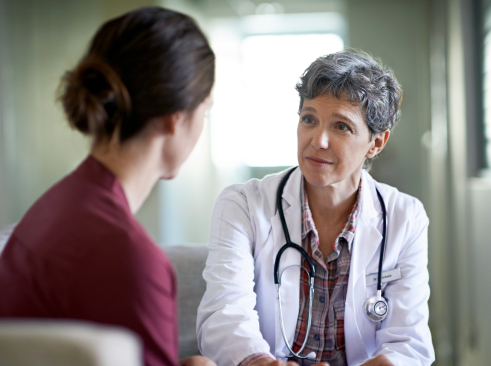
It’s important to see your doctor if you have heavy periods and symptoms are impacting your daily life.
It’s helpful to record information about your periods and take it with you to discuss at your appointment. You can record:
- when you get your periods
- the length and heaviness of your periods
- how your periods impact your life.
How are heavy periods diagnosed?
Your doctor may ask about your periods, review your medical history and do a physical examination to check your uterus and ovaries.
They might do tests to find out what’s causing the problem. For example, a pregnancy test or blood tests.
Your doctor may also organise an ultrasound to check your pelvic organs. This can be done on your abdomen or inside your vagina. You can tell your doctor if you’re not comfortable having an internal ultrasound.
For more information about the care you should expect if you have heavy periods, visit the Australian Commission of Safety and Quality in Health Care website.
Treatments to reduce heavy periods
Treatment options for heavy periods depend on your preferences, the cause of the bleeding and whether you have other health conditions.
Your doctor is likely to suggest medicine as the first treatment option. Depending on your situation, they may suggest:
- tranexamic acid tablets, which help blood to clot and can reduce blood loss
- anti-inflammatory tablets, such as ibuprofen
- the Pill
- an IUD
- progestins (a synthetic forms of the progesterone hormone).
Your doctor may also refer you to a gynaecologist if your bleeding hasn’t improved with other treatments.
If medicine doesn’t help, your doctor may refer you to a gynaecologist to discuss other options, such as surgery. Depending on your situation, treatments might include:
- an endometrial ablation – a procedure to remove the uterus lining
- a uterine artery embolization (UAE) – a procedure to block off blood flow to fibroids so they shrink in size and produce less bleeding
- a myomectomy – surgery to remove fibroids from the uterus
- a hysteroscopy – a procedure to remove fibroids or polyps, or to remove the uterus lining
- a hysterectomy – surgery to remove the uterus (only considered when all other treatments haven’t worked and you don’t want to become pregnant in the future).
It’s important to discuss the risks and benefits of each procedure with your gynaecologist before you decide.
For more information about treatments for heavy periods, read this fact sheet on the Australian Commission of Safety and Quality in Health Care website.
Heavy periods are associated with iron deficiency and anaemia, so it’s important to get your iron levels checked. If your iron levels are low, your doctor may recommend you take a daily iron supplement or have an iron infusion.
Podcast
Listen to this podcast about how heavy periods can affect you.
Our review process
This information has been reviewed by clinical experts and is based on the latest evidence.
Our content review process ensures our health information is accurate, trustworthy, current and useful.
We regularly check our information to make sure it reflects the latest clinical guidelines and key findings from large, reliable studies.
Where possible, we focus on Australian research to make our information more relevant locally.
Experts play a key role in reviewing our content. Clinicians at Jean Hailes check information for accuracy and real‑world relevance. These include GPs, gynaecologists, endocrinologists, psychologists and allied health professionals.
We also work with partner organisations, independent specialists and people with lived experience to make sure our content reflects both expert knowledge and the experiences of the community.

Talking periods
Build confidence and break down stigma. Get tips and tools for talking about periods with your kids.